
CANNABIS BENEFITS MASTERCLASS
1. MECHANICS
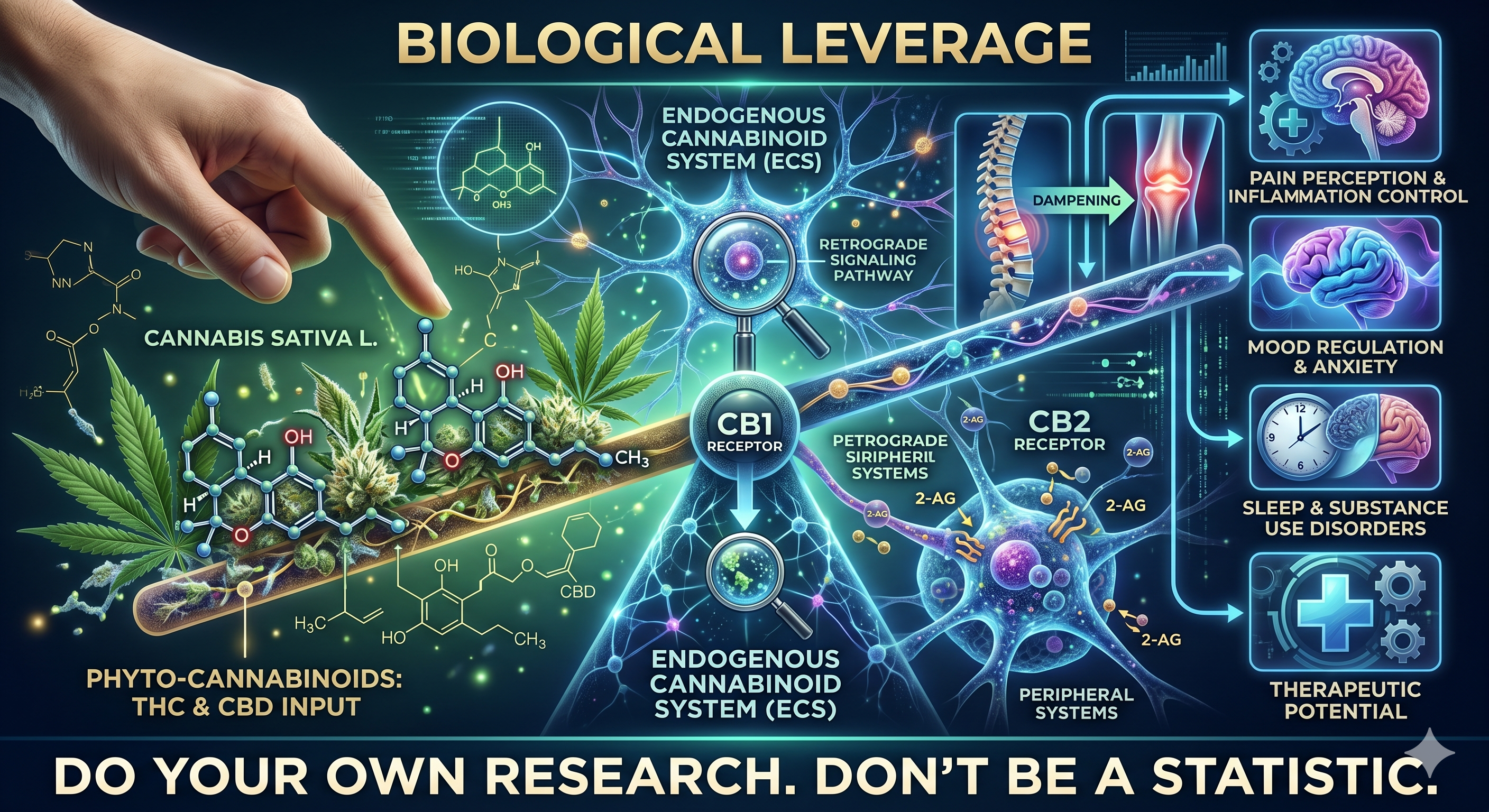
Cannabis sativa L., or cannabis, contains numerous phytocannabinoids, with Δ9-tetrahydrocannabinol (THC) and cannabidiol (CBD) being the most studied. These compounds interact with our body's endogenous cannabinoid system (ECS), a network of receptors and neurotransmitters managing processes such as pain perception, mood regulation, and inflammation control. The ECS operates on a retrograde signaling pathway: active cannabinoids are transported back to the neuron after their effects are achieved, thereby dampening further activity.
2. BIOLOGICAL LEVERAGE
When phytocannabinoids engage with the ECS, they trigger various biological actions. THC binds directly to cannabinoid receptor type 1 (CB1), producing psychoactive effects like euphoria and altered perception. In contrast, CBD modulates CB1 without activating it and interacts with other receptors—like GABA, serotonin, and dopamine—which may explain its potential therapeutic benefits for anxiety, sleep disorders, and substance use disorders. Our bodies produce endogenous cannabinoids: anandamide (AEA) binding to CB1, and 2-arachidonoylglycerol (2-AG) binding to CB2. Enzymes like fatty acid amide hydrolase (FAAH) regulate these endocannabinoids' concentrations.
3. TACTICAL IMPLEMENTATION
To tap into cannabis's benefits, consider the phytocannabinoid profile you're aiming for and the desired outcome. For pain relief and inflammation control, high-THC strains or full-spectrum products might be ideal due to THC's interaction with CB1 receptors. Conversely, higher CBD content is purportedly beneficial for anxiety and seizures through its modulation of GABA and 5-HT1A receptors. Begin with low doses when using cannabis therapeutically and gradually increase under supervision to manage side effects such as psychoactivity, dry mouth, or dizziness. Delivery method is also crucial; inhaling cannabis provides rapid but brief THC delivery, while edibles offer delayed onset but longer-lasting effects.
The complex interplay of cannabis compounds within the ECS holds therapeutic potential for a broad range of applications from pain management to mental health support. Individual experiences and outcomes can vary significantly due to genetic variability in cannabinoid receptor distribution, metabolic rates, and tolerance limits.
Do your own research. Don't be a statistic.
Prostar Life Hack
When implementing cannabis therapeutically, prioritize full-spectrum profiles to leverage the "entourage effect" for systemic inflammation, and always utilize a "start low, go slow" titration protocol to map individual genetic receptor sensitivity.
[ AUTHOR: LEAD TECHNICAL RESEARCHER ]