
Psilocybin DMN Suppression Mechanism
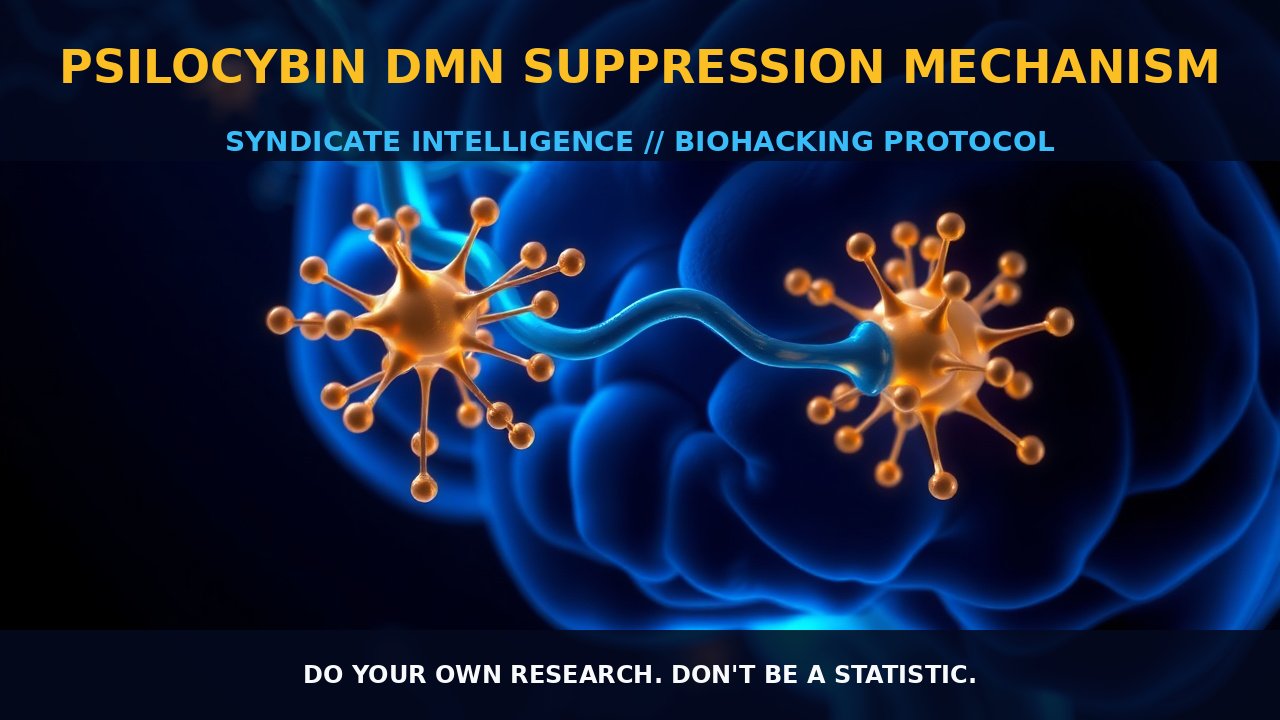
THE MECHANICS
Psilocybin's neuropharmacological dance begins with its unmetabolized form binding to serotonin receptors like 5-HT1A, 5-HT2A, and 5-HT2C. These receptor interactions are key to the hallucinogenic effects that characterize psilocybin use. DMT, a closely related compound, shows similar behavior by increasing neural plasticity in specific brain regions such as the prefrontal cortex. This neuroplastic change is pivotal for altering fear memory and enhancing response to behavioral challenges.
THE BIOLOGICAL LEVERAGE
The intricacies of long-term potentiation (LTP) and depression (LTD) play a crucial role in how DMT interacts with neural structures. The proximity between INMT enzymes and sigma-1 receptors suggests localized activation, potentially influencing motoneurons. Biosynthesis of DMT near these receptors points to inducible production in specific cell types, adding another layer to its biological impact.
THE TACTICAL IMPLEMENTATION
MAO inhibitors extend the effect of psilocybin by preventing rapid metabolic breakdown but complicate interpretation due to their influence on neurotransmitter levels. Deuterated analogs offer an alternative for prolonged effects at lower doses, without significantly altering binding mechanisms. These nuances in administration protocols are vital for optimizing the psychoactive experience and research outcomes.
Do your own research. Don't be a statistic.
Prostar Life Hack
Always verify protocol biological leverage with baseline biometric tracking. Data is sovereignty.
[ AUTHOR: LEAD TECHNICAL RESEARCHER ]