L-Tryptophan Serotonin-Melatonin Pathway
THE MECHANICS
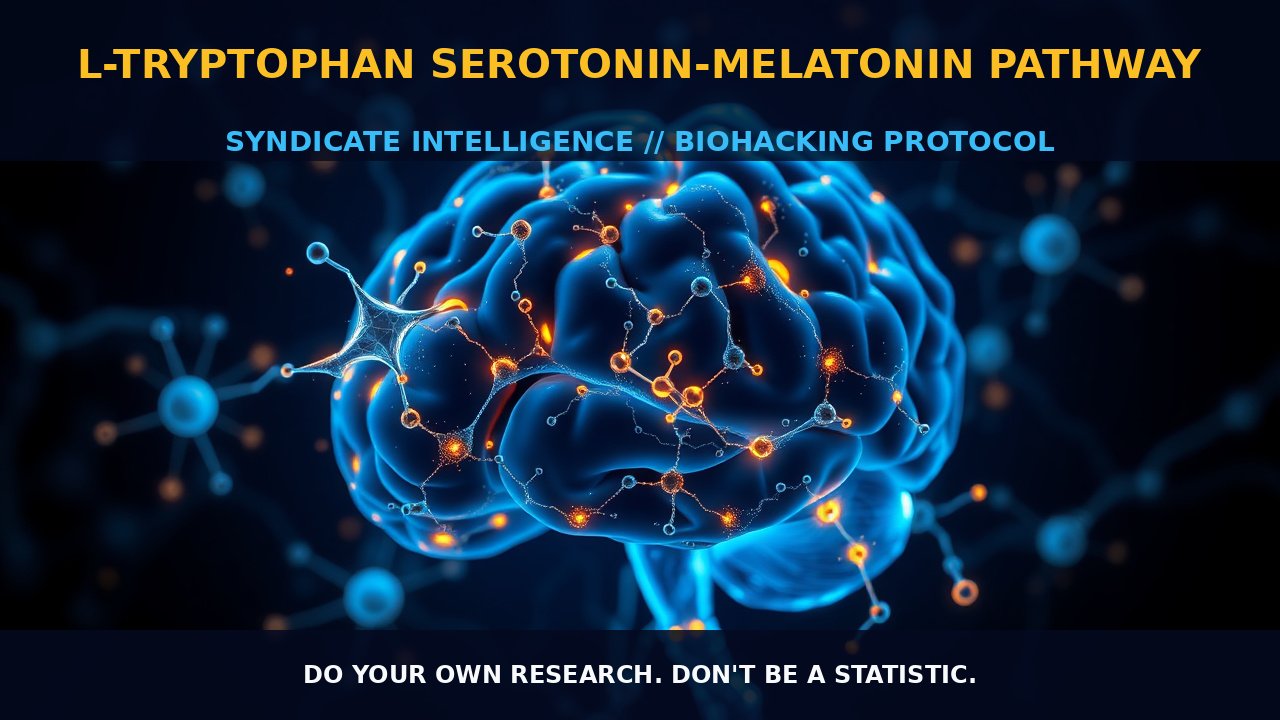
Tryptophan (Trp) is an essential amino acid that transforms into serotonin, melatonin, and DMT through intricate metabolic pathways. The indole ring retaining route yields serotonin via 5-hydroxytryptophan (5-HTP), while the breakdown pathway results in kynurenine (KYN). Serotonin then morphs into melatonin under pineal gland regulation by light exposure. DMT synthesis involves converting tryptophan to N-methyltryptamine (NMT) and subsequent double methylation.
THE BIOLOGICAL LEVERAGE
Serotonin's role extends beyond mood regulation, influencing appetite, sleep, memory, and learning. Melatonin primarily regulates circadian rhythms, while QUIN from the KYN pathway impacts energy metabolism. High serotonin levels can trigger severe symptoms such as restlessness, diarrhea, elevated body temperature, nausea, and high blood pressure. DMT administration affects pupil dilation, rectal temperature, β-endorphin, corticotropin, cortisol levels, but leaves melatonin unchanged.
THE TACTICAL IMPLEMENTATION
Understanding tryptophan's pathways allows for strategic manipulation of neurotransmitter synthesis. For instance, boosting Trp intake can enhance serotonin and melatonin production, aiding sleep and mood regulation. Conversely, QUIN from KYN pathway could be leveraged in energy metabolism studies. DMT’s effects on β-endorphin and cortisol provide insights into stress and pain modulation.
Do your own research. Don't be a statistic.
Prostar Life Hack
Boosting Trp intake can enhance serotonin and melatonin production, aiding sleep and mood regulation.
[ AUTHOR: LEAD TECHNICAL RESEARCHER ]