
Thc Activates Cannabinoid Receptors
MECHANICS
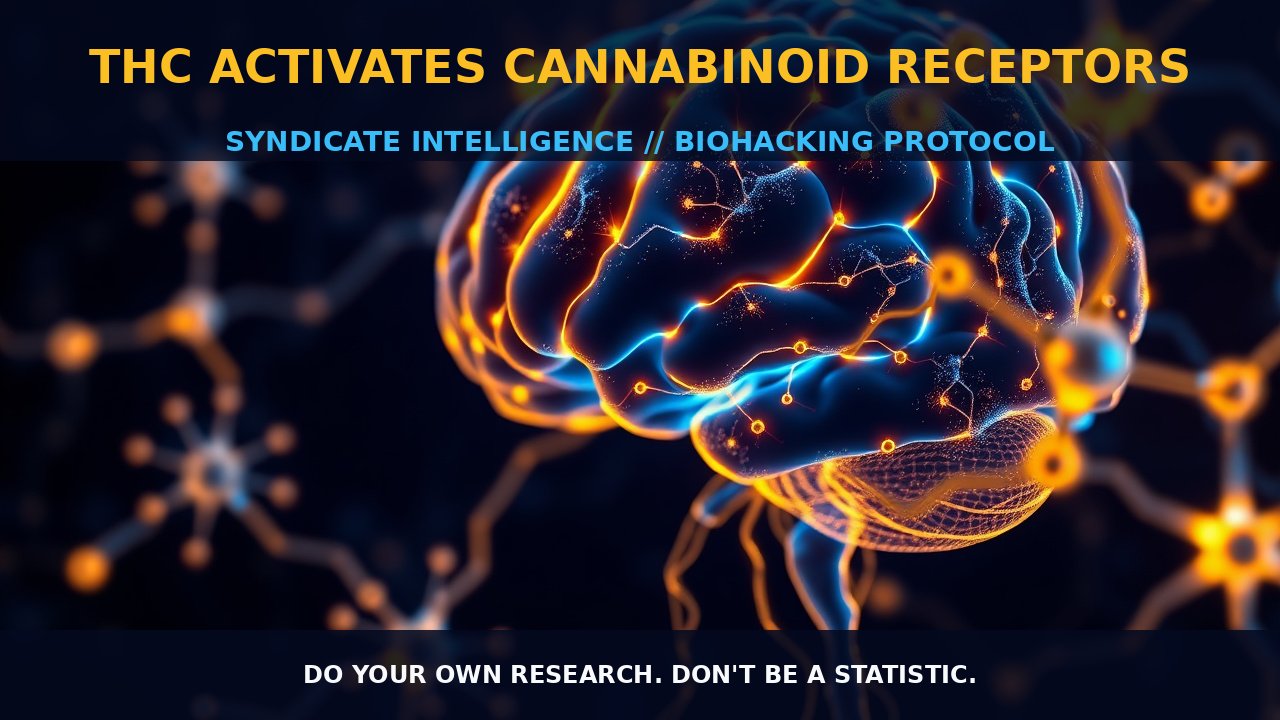
THC (tetrahydrocannabinol), the primary psychoactive compound found in cannabis, operates by binding to and activating cannabinoid receptors primarily within the brain. THC is an agonist of both CB1 and CB2 receptors but shows a higher affinity for the CB1 receptor located predominantly in the central nervous system. This interaction leads to a cascade of neurochemical changes, influencing neurotransmitter release and synaptic activity across various neural circuits.
THC's mechanism involves enhancing the endocannabinoid system, which modulates neuronal activity through retrograde signaling between neurons. Endogenous cannabinoids such as anandamide and 2-AG activate cannabinoid receptors, but THC can mimic this effect by binding to CB1 receptors with greater affinity than these naturally occurring compounds. This interaction reduces excitatory neurotransmitter release, particularly at glutamatergic synapses, which is critical for synaptic plasticity and learning.
BIOLGOICAL LEVERAGE
The influence of THC on the brain spans multiple pathways, affecting cognition, mood, and sensory perception. At the cognitive level, THC can enhance memory in certain contexts while impairing it in others. Studies indicate that THC may improve working memory performance but can interfere with long-term potentiation, a process crucial for learning and memory formation.
THC also modulates mood by influencing serotonin and dopamine neurotransmission. It has been shown to increase dopamine release in the mesolimbic pathway, contributing to its euphoric effects. Furthermore, THC interacts with GABAergic inhibitory neurons, which helps regulate neural excitability. This interaction is thought to underlie some of the anxiolytic properties of cannabis.
Regarding sensory perception, THC can alter how individuals perceive time and space by modulating activity in brain regions associated with visual and auditory processing. The drug’s impact on the endocannabinoid system also extends beyond cognitive functions; it influences synaptic plasticity and neurogenesis, potentially playing a role in both neuroprotective and pro-inflammatory processes.
TACTICAL IMPLEMENTATION
When considering practical applications of THC for biohacking purposes, dosing is crucial. Low-to-moderate amounts can provide beneficial effects such as increased creativity, relaxation, and enhanced sensory perception without significant cognitive impairment. Users typically experience these benefits within minutes after inhalation or ingestion, with the effects lasting several hours.
For precise implementation, starting with a low dose (e.g., 5-10mg) of THC via an edible form allows for controlled absorption and minimizes the risk of overconsumption. Smoking cannabis provides faster onset but requires more careful titration due to rapid fluctuations in blood levels. Combining THC with CBD may help mitigate some side effects like anxiety or paranoia, as CBD has shown promise in counteracting THC-induced psychoactive effects.
Stacking THC with other nootropics such as tianeptine can enhance its cognitive benefits by supporting synaptic plasticity and improving mood. However, the interactions between these compounds need to be carefully managed, as they may affect neurotransmitter systems differently depending on the dose and timing of administration.
Do your own research. Don't be a statistic.
Prostar Life Hack
For precise implementation, starting with a low dose (e.g., 5-10mg) of THC via an edible form allows for controlled absorption and minimizes the risk of overconsumption.
[ AUTHOR: LEAD TECHNICAL RESEARCHER ]