
Nicotine nAChR Pharmacology
THE MECHANICS
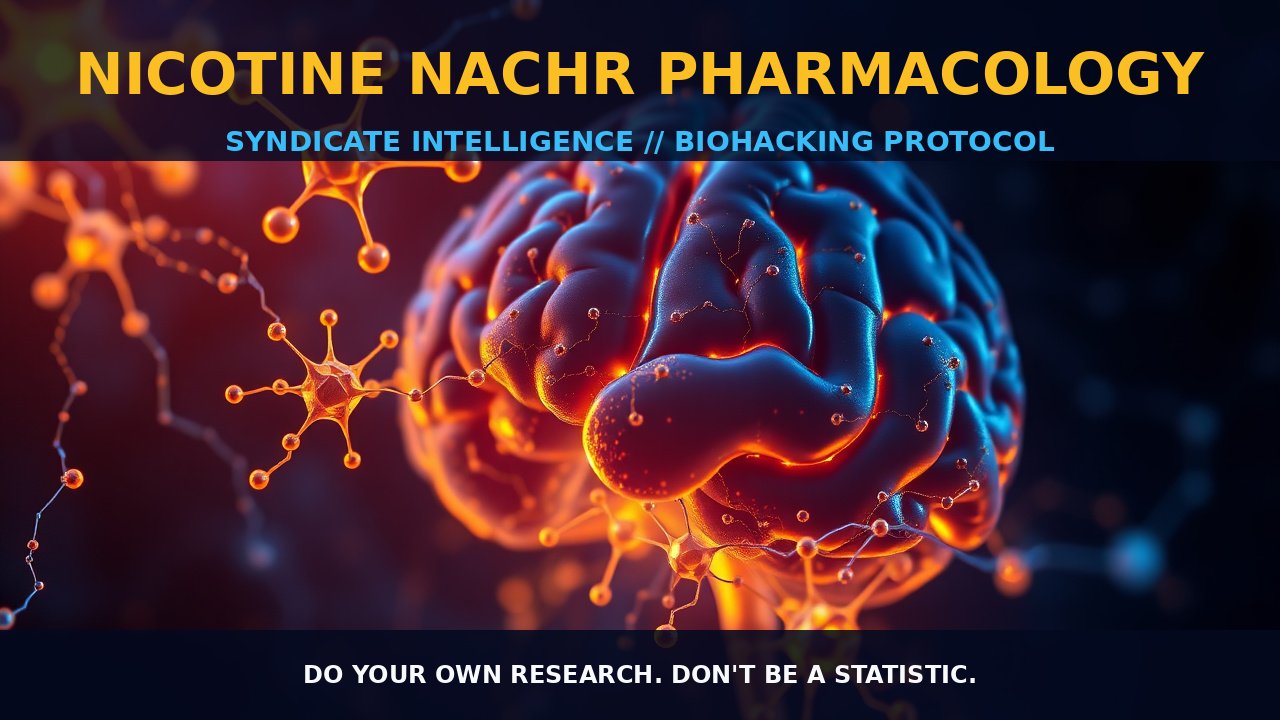
Nicotine molecules lock onto nicotinic acetylcholine receptors (nAChR) in the brain, triggering a cascade of effects. These interactions regulate neurotransmitter systems, enhancing alertness and providing a calming influence. Dopamine levels surge, driving nicotine's addictive grip on users. Nicotine patches, gum, sprays, and injections deliver varying degrees of risk and efficacy.
THE BIOLOGICAL LEVERAGE
Clinical studies reveal that nicotine offers tangible benefits for neurological disorders such as Parkinson’s, ADHD, Tourette’s, and schizophrenia. Improved coordination, vigilance, memory, and reaction times are reported. Handwriting becomes more controlled and fluent with increased finger tapping accuracy. Appetite suppression is observed, especially when paired with caffeine.
THE TACTICAL IMPLEMENTATION
Nicotine's impact on cognitive functions extends beyond its addictive properties. It enhances learning and memory while mitigating some effects of aging and neurological conditions like Alzheimer’s disease. However, the addictive potential that activates the mesolimbic dopamine system remains a significant downside. Dosage methods vary in their effectiveness and safety profiles.
Do your own research. Don't be a statistic.
Prostar Life Hack
Dosage methods vary in their effectiveness and safety profiles.
[ AUTHOR: LEAD TECHNICAL RESEARCHER ]