
Dopamines Role in the Brains Reward System
The Mechanism
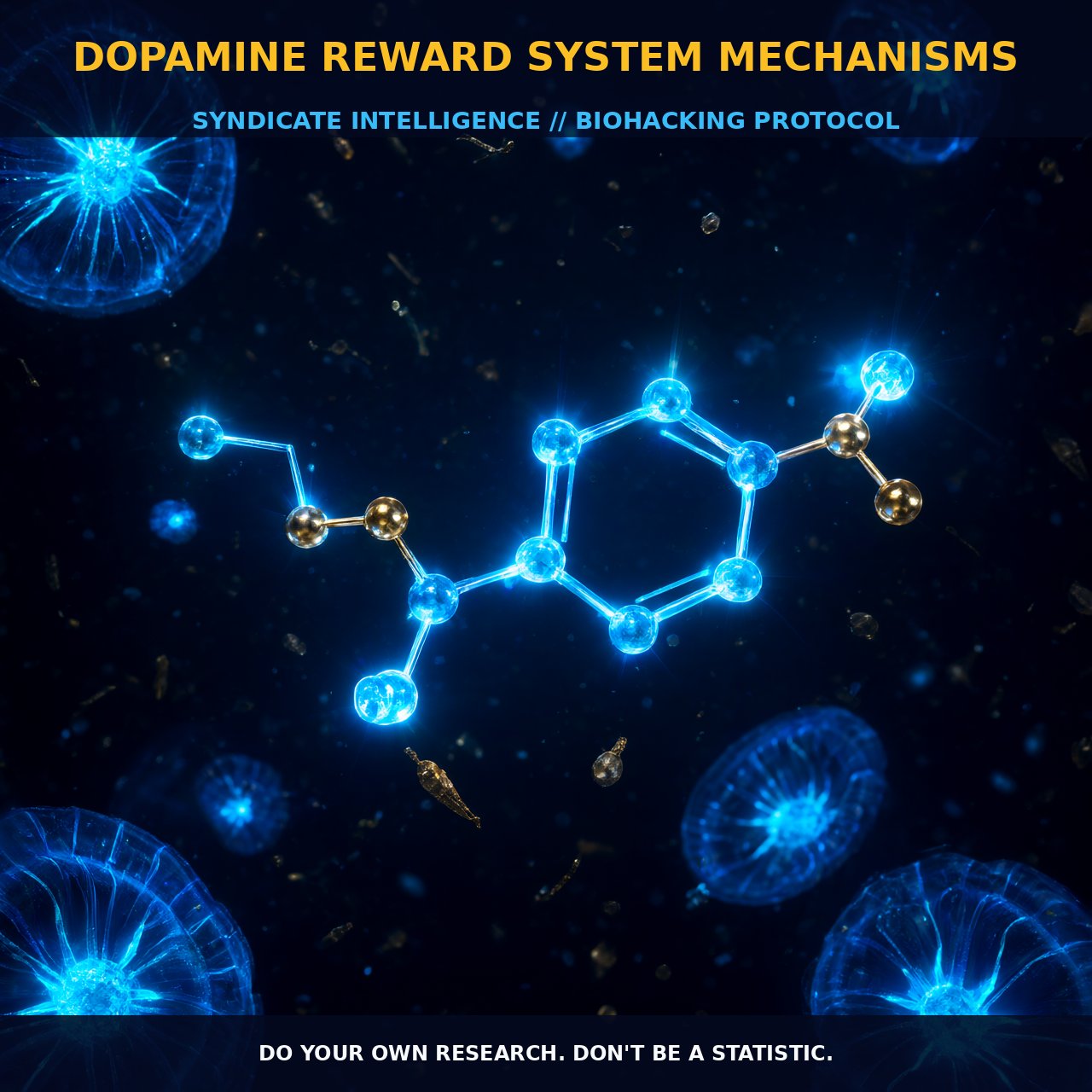
Dopamine, a critical neurotransmitter belonging to the catecholamine and phenethylamine families, plays a pivotal role in the brain's reward system. Synthesized from tyrosine and DOPA, dopamine is intricately involved in various functions including motivation, cognition, and reward-seeking behavior. The brain is equipped with several dopamine systems, each contributing to distinct neurological processes. Notably, the mesolimbic dopamine system, extending from the ventral tegmental area to the nucleus accumbens, is particularly significant in mediating rewarding experiences and reinforcing behaviors.
This system operates through the activation of dopamine receptors, primarily D1 and D2 receptors, which are distributed throughout the brain and influence various neuronal activities. The mesolimbic pathway is under tonic inhibition by GABAergic interneurons. When these GABAergic neurons are activated, they inhibit the dopaminergic neurons, maintaining a balanced state. However, when opioid receptors localized on these GABAergic neurons are activated, their activity is reduced, leading to disinhibition of the dopaminergic system. This results in an increase in dopamine release in specific brain regions such as the nucleus accumbens, thereby enhancing reward and reinforcing behavior patterns.
Similar to drugs of abuse such as cocaine, amphetamine, alcohol, and nicotine, this mechanism contributes to their addictive properties by activating the mesolimbic dopaminergic system.
Biological Leverage
Dopamine dysregulation, either excessively high or low levels, has significant implications for cognitive and motivational functions. Both extremes can impair memory, indicating a delicate balance in dopamine levels is crucial for optimal brain function. Dopamine-producing neurons, of which there are approximately 400,000 in the human brain, are heavily influenced by the D1-D5 receptors. The D1 receptors, being the most abundant, play a critical role in modulating the activity of these neurons. When activated, D1 receptors enhance the release of dopamine, supporting reward-seeking and motivated behaviors.
Conversely, D2 receptors, while less numerous, also contribute to the modulation of dopaminergic neurons but typically inhibit their activity. High levels of dopamine are associated with conditions such as schizophrenia, hypersexuality, and pathological gambling, often resulting from the excessive activation of the mesolimbic dopaminergic pathway. Low levels of dopamine are linked to conditions such as Parkinson’s disease, ADHD, and depression, where the dopaminergic system is underactive or compromised. The balance of dopamine within the brain is thus crucial not only for cognitive function but also for the maintenance of normal behavior patterns and emotional well-being.
Tactical Implementation
To effectively leverage the dopamine reward system, biohackers can implement various strategies. Dietary interventions play a significant role in supporting dopamine production. Foods rich in tyrosine and phenylalanine, which are precursors to dopamine, can help boost its levels in the brain. Vegetables and fruits such as bananas and avocados, along with animal products like turkey, chicken, eggs, and pork, can provide the necessary nutrients for dopamine synthesis.
Nuts and seeds, particularly Mucuna pruriens, which contains L-DOPA, can be particularly effective in enhancing dopamine levels. L-DOPA, the immediate precursor to dopamine, is highly bioavailable and readily converted to dopamine in the brain. Supplements can also be used to enhance dopamine function. Mucuna pruriens provides a natural source of L-DOPA and has shown promise in clinical studies for its ability to increase dopamine levels in the brain.
Another approach is to use compounds that act on the opioid receptors, such as mitragynine found in kratom, which can activate the GABAergic interneurons and enhance dopaminergic activity. This, in turn, can lead to increased dopamine release in the nucleus accumbens, enhancing the reward and reinforcing behavior patterns. Timing and stacking are also critical in optimizing dopamine function. For instance, consuming L-DOPA or Mucuna pruriens early in the day can provide sustained support for dopamine production throughout the day. Combining these supplements with GABAergic agents like passionflower or magnesium can further enhance the dopamine release by reducing GABAergic inhibition.
Incorporating activities that naturally stimulate the reward system, such as exercise or social interactions, can further support the dopamine reward pathway.
Prostar Life Hack
To enhance dopamine levels, consume foods rich in tyrosine and phenylalanine such as bananas, avocados, and eggs. Consider taking Mucuna pruriens early in the day for sustained support, and combine it with GABAergic agents like passionflower or magnesium for enhanced dopamine release.
[ AUTHOR: LEAD TECHNICAL RESEARCHER ]