
Harnessing Tryptophan for Enhanced Sleep and Dreaming
1. The Mechanism
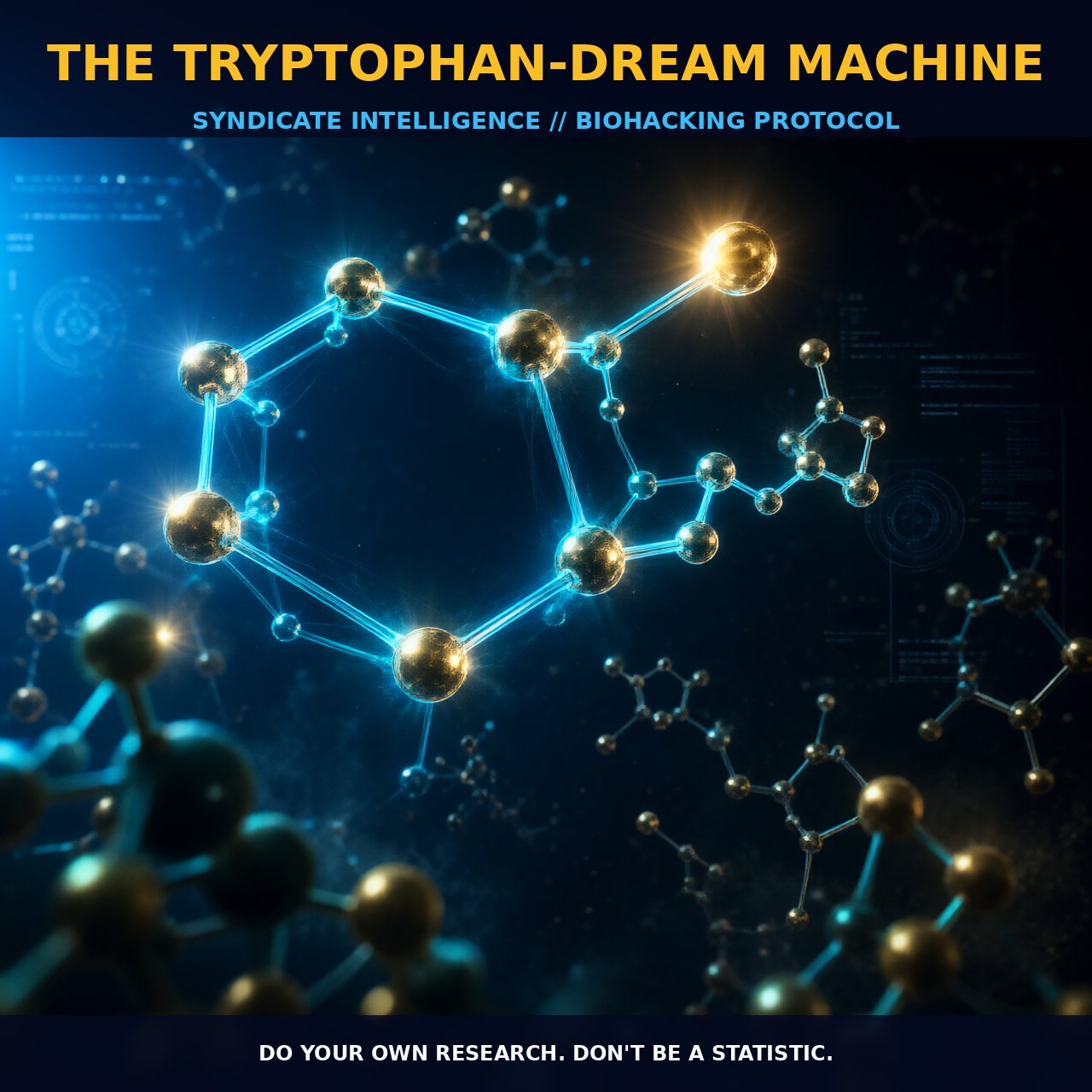
The Tryptophan-Dream Machine leverages the essential amino acid tryptophan to modulate sleep and dream states through its conversion into key neurotransmitters and hormones, including serotonin and melatonin. Tryptophan crosses the blood-brain barrier and is converted into serotonin via the enzyme tryptophan hydroxylase. Serotonin then becomes a precursor to melatonin, which regulates the sleep-wake cycle.
This metabolic pathway is crucial for establishing a stable rhythm of sleep and wakefulness, enhancing the overall quality of sleep and dreams. Once metabolized, these downstream compounds interact with the 5-HT2A receptor in the central nervous system, influencing sensory perception and cognitive processes, and enhancing the vividness and complexity of dream experiences.
The pineal gland responds to changes in light and dark cycles, further modulating the sleep-wake cycle and enhancing sleep quality. This interplay between tryptophan, serotonin, and melatonin creates a synergistic effect that supports deeper, more restorative sleep and richer dream experiences.
2. Biological Leverage
The biological leverage of the Tryptophan-Dream Machine lies in its ability to influence multiple pathways within the brain and body. Tryptophan not only serves as a precursor to serotonin and melatonin but also modulates the production of other neurotransmitters such as GABA, which helps to calm the brain. This balance between excitatory and inhibitory neurotransmitters is essential for maintaining a relaxed yet alert state, conducive to vivid and lucid dreaming.
Increase in serotonin and melatonin levels can enhance neural plasticity and synaptic strength, critical for memory consolidation and learning during sleep, leading to more coherent and memorable dream experiences. This enhancement can facilitate the integration of new information and emotional processing. Additionally, the regulation of these neurotransmitters can impact the homeostasis of the circadian rhythm, optimizing sleep quality.
The activation of the 5-HT2A receptor by these metabolic byproducts can influence the activity of the default mode network (DMN) in the brain, associated with self-referential thinking and introspection. This activation can promote a state of heightened awareness and self-reflection, making it easier to achieve and maintain lucid dreams. Furthermore, the modulation of cAMP signaling through these pathways can enhance cognitive function and sensory processing, contributing to the vivid and detailed nature of dream experiences.
3. Tactical Implementation
Effective implementation of the Tryptophan-Dream Machine requires understanding the optimal dosing and timing of tryptophan supplementation. Low-to-moderate amounts, typically around 500 to 1000 milligrams, taken in the evening, can help promote a stable and balanced sleep-wake cycle. Adjust dosages based on individual tolerance and response.
Timing is also key. Taking tryptophan a few hours before bedtime allows for adequate absorption and metabolism into serotonin and melatonin, ensuring their availability during sleep. Stacking tryptophan with magnesium can enhance its effectiveness, as magnesium is involved in the enzymatic conversion of tryptophan to serotonin, further supporting relaxation and deepening of sleep.
To enhance dream experiences, incorporating tryptophan with other nootropic compounds such as L-theanine or GABA can further support the calming and cognitive enhancement effects. These supplements can work synergistically to promote a state of relaxed alertness and heightened sensory perception, conducive to vivid and lucid dreaming. Monitor individual responses and adjust dosages accordingly.
Prostar Life Hack
Take 500-1000 milligrams of tryptophan a few hours before bedtime, along with magnesium, to enhance sleep quality and dream vividness. Stack with L-theanine or GABA for additional cognitive benefits.
[ AUTHOR: LEAD TECHNICAL RESEARCHER ]