
Dual-Action Neuromodulation with Mitragynine
1. The Mechanism
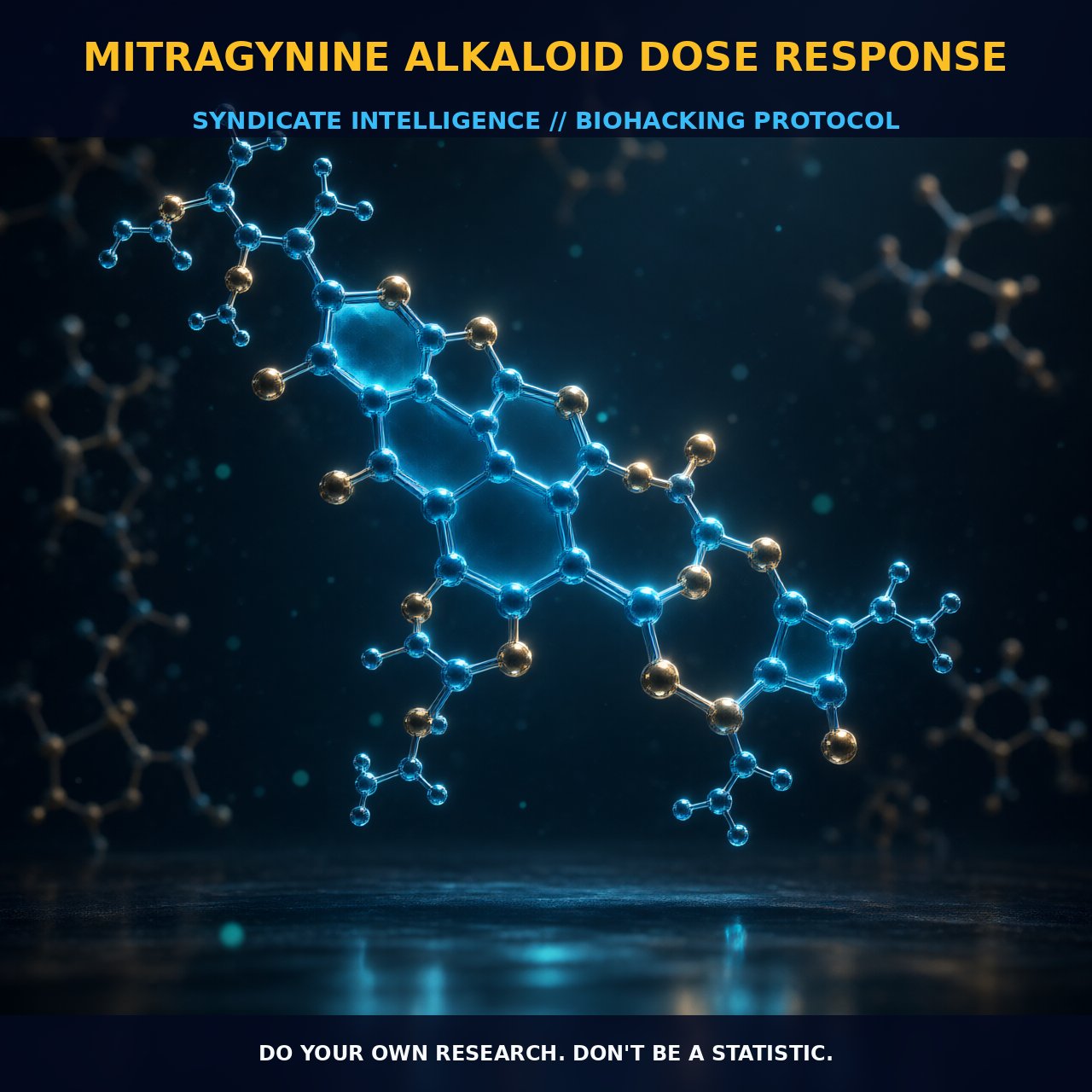
Mitragynine, the primary alkaloid in kratom, is a fascinating neuromodulator with a complex mechanism of action. Its molecular weight is 398.5 g/mol, with melting and boiling points of 104 and 235 °C, respectively. The empirical formula is C23H30N2O4, and the compound is lipophilic, with a logP of 1.7, indicating it can readily cross biological membranes. Mitragynine's pKa of 8.1 suggests it is more soluble in basic media, making it highly bioavailable. This alkaloid binds to multiple receptors, primarily acting as a G-protein biased agonist at mu-opioid receptors, while also modulating adrenergic activity and calcium channels. Mitragynine's unique binding profile allows it to increase focus and physical energy at low doses, while higher doses can induce a more sedative effect. This dual action is due to the compound's ability to interact with various neuronal pathways, including cAMP signaling and CREB protein expression, influencing both the ascending and descending monoaminergic systems.
The primary role of mitragynine is to act as an adrenergic agonist at low doses, enhancing focus and physical energy. As a G-protein biased agonist, it binds to mu-opioid receptors but does not fully activate them, leading to a lower risk of respiratory depression compared to traditional opioids. This mechanism allows mitragynine to provide a balanced stimulation and analgesia, making it a versatile neuromodulator. The alkaloid's interaction with calcium channels further enhances its neuroactivity, modulating neuronal excitability and synaptic transmission. This intricate interplay between receptor binding and channel modulation is crucial for understanding the diverse effects of mitragynine.
2. Biological Leverage
Mitragynine's biological leverage stems from its interactions with multiple receptor types and its influence on neuronal signaling pathways. At low-to-moderate doses, mitragynine acts predominantly as an adrenergic agonist, enhancing focus and physical energy. This effect is primarily mediated through the activation of adrenergic receptors, leading to increased norepinephrine release and downstream effects such as enhanced alertness and physical performance. Additionally, mitragynine's binding to mu-opioid receptors as a G-protein biased agonist contributes to its analgesic properties, providing a mild pain-relieving effect without the full respiratory depression seen with traditional opioids.
At higher doses, mitragynine shifts its profile, acting more as a sedative. This shift is due to increased binding to mu-opioid receptors, leading to a more pronounced analgesic effect. The compound also influences cAMP signaling and CREB protein expression, further modulating neuronal activity and contributing to its sedative properties. The dual action of mitragynine, from stimulant to sedative, is a result of its complex interaction with multiple receptors and pathways, making it a versatile neuromodulator that can support both focus and relaxation.
Mitragynine's influence on neuronal calcium channels is another critical aspect of its biological leverage. By modulating calcium influx, the alkaloid can alter neuronal excitability and synaptic transmission, influencing the overall state of the nervous system. This modulation of calcium channels is particularly important for understanding the alkaloid's impact on neuronal function and its contribution to the overall effects observed in users. Additionally, the compound's ability to influence cAMP signaling and CREB protein expression further underscores its role in modulating neuronal activity and providing both stimulant and sedative effects.
3. Tactical Implementation
For biohackers and self-optimizers, the implementation of mitragynine can be tailored to specific goals. At low doses, typically 1-2 grams of white or green vein kratom, users can experience enhanced focus and physical energy, making it ideal for productivity and exercise. The adrenergic agonist effect increases norepinephrine release, leading to improved alertness and performance. This dose range is safe and effective for cognitive and physical enhancement, providing a subtle boost without the sedative effects of higher doses.
At higher doses, ranging from 4-6 grams of red vein kratom, users can experience a more pronounced sedative effect, ideal for relaxation and pain relief. The increased binding to mu-opioid receptors provides a mild analgesic effect, reducing pain and stress. This dose range is suitable for users seeking a balanced state of relaxation and pain relief, making it useful for stress management and post-workout recovery. However, users should be cautious not to exceed 15 grams in 24 hours to avoid 'The Wobbles', a vestibular system disruption that can occur with excessive dosing.
Stacking mitragynine with other compounds can further enhance its effects. For example, combining it with caffeine can amplify its adrenergic effects, providing a synergistic boost in focus and energy. Conversely, stacking it with magnesium can enhance its sedative effects, promoting relaxation and pain relief. Timing the dose correctly is also crucial; users can optimize their focus by taking it in the morning and enhance relaxation by taking it in the evening.
Prostar Life Hack
Mitragynine's unique binding profile and interaction with multiple receptors and pathways allow for a dual-action effect: enhancing focus and physical energy at low doses, and inducing relaxation and pain relief at higher doses.
[ AUTHOR: LEAD TECHNICAL RESEARCHER ]