
Optimizing Dopamine Synthesis: A Neurochemical Overview
1. The Mechanism
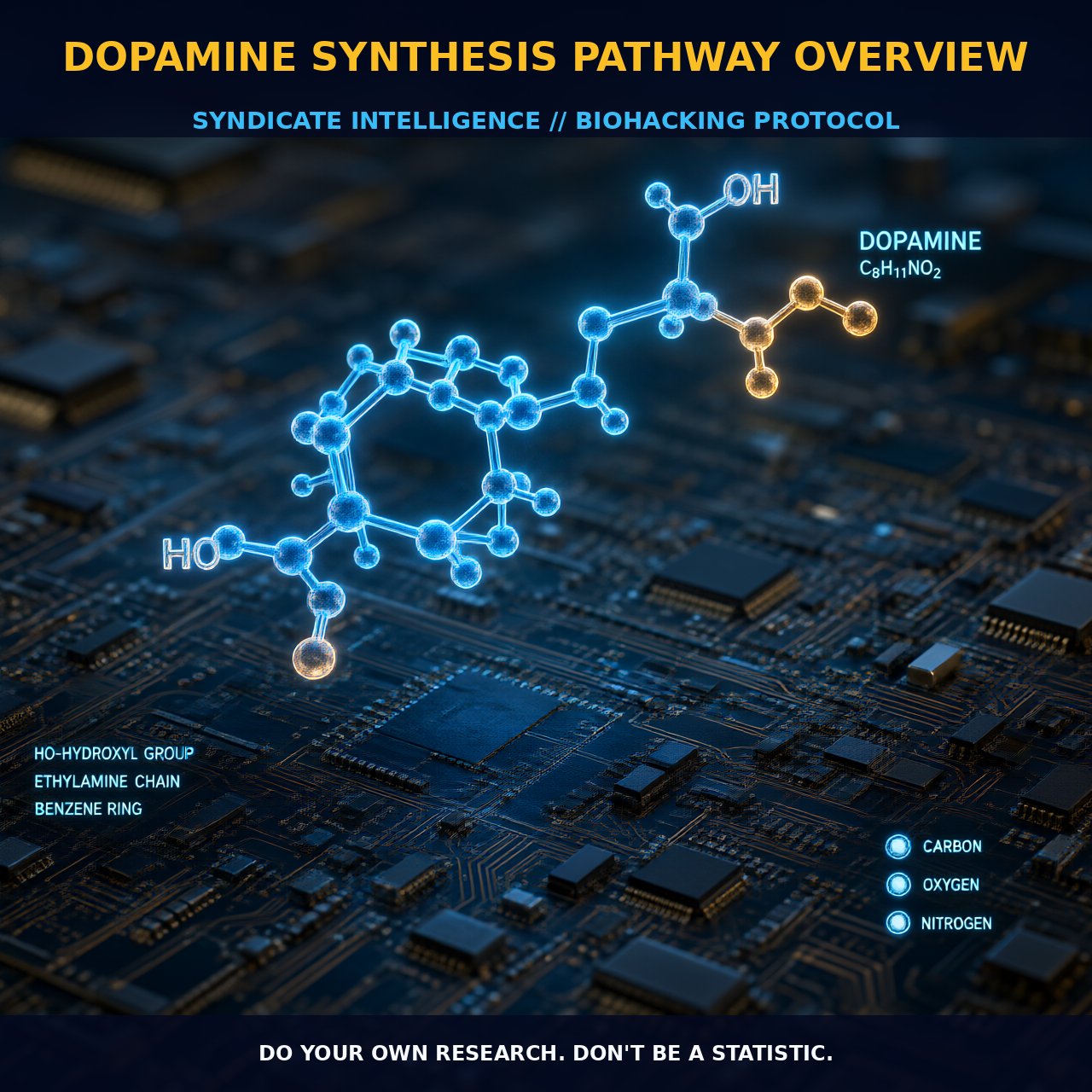
Dopamine is a crucial neurotransmitter that plays a pivotal role in various physiological and behavioral functions. It is synthesized from the amino acids tyrosine and DOPA, and its production is essential for the modulation of neural activity. The process begins with the conversion of tyrosine to L-DOPA by the enzyme tyrosine hydroxylase. This step is considered the rate-limiting step in dopamine synthesis.
L-DOPA is then converted to dopamine by the enzyme aromatic L-amino acid decarboxylase (AADC). The activity of these enzymes is highly sensitive to regulation by cofactors and can be influenced by various metabolic factors, including genetic variations and environmental conditions. Understanding this mechanism is crucial for biohackers aiming to optimize dopamine levels in the brain and body.
2. Biosynthetic Leverage
The synthesis of dopamine involves several key enzymes and metabolic steps, each presenting potential targets for modulation. The enzyme tyrosine hydroxylase is critical for the production of L-DOPA, the immediate precursor to dopamine. This enzyme is dependent on cofactors such as iron and oxygen, and its activity can be influenced by various factors including genetic variations and environmental conditions.
Enhancing the activity of tyrosine hydroxylase can increase the rate of dopamine synthesis. Additionally, the enzyme AADC is crucial for converting L-DOPA to dopamine. This enzyme is highly sensitive to inhibition by certain compounds, such as carbidopa, which is often used in clinical settings to increase the efficacy of L-DOPA therapy. Enhancing the efficiency of these enzymes can lead to increased dopamine levels, potentially improving cognitive and motor functions.
However, excessive dopamine synthesis can lead to dysregulation syndrome, characterized by symptoms such as pathological gambling, hypersexuality, and compulsive eating. This underscores the importance of balancing dopamine levels through precise manipulation of the biosynthetic pathway.
3. Tactical Implementation
To optimize dopamine synthesis, biohackers can consider several strategies. One approach is to supplement with precursors such as tyrosine and phenylalanine, which serve as the building blocks for dopamine. These amino acids can be ingested in moderate amounts to support the rate-limiting step of dopamine synthesis.
Supporting the activity of tyrosine hydroxylase and AADC can enhance the efficiency of the pathway. This can be achieved through the use of cofactors and vitamins that promote enzyme function, such as iron and vitamin B6. Another tactic involves the use of specific inhibitors or activators of key enzymes in the pathway. For example, carbidopa, which inhibits AADC, can be used to increase the availability of L-DOPA for conversion to dopamine.
Timing is crucial, with optimal results often seen when these supplements are taken on an empty stomach to enhance absorption. Furthermore, biohackers should monitor their dopamine levels through regular testing and adjust their dosing accordingly to avoid dysregulation. It is essential to maintain a balance between enhancing dopamine synthesis and preventing excessive levels, which can lead to dysregulation syndrome.
Prostar Life Hack
To optimize dopamine synthesis, consider supplementing with tyrosine and phenylalanine and supporting the activity of key enzymes like tyrosine hydroxylase and AADC with cofactors such as iron and vitamin B6. Take supplements on an empty stomach for better absorption and monitor dopamine levels to avoid dysregulation.
[ AUTHOR: LEAD TECHNICAL RESEARCHER ]