
Biosynthesis and Biological Impact of DMT
1. The Mechanism
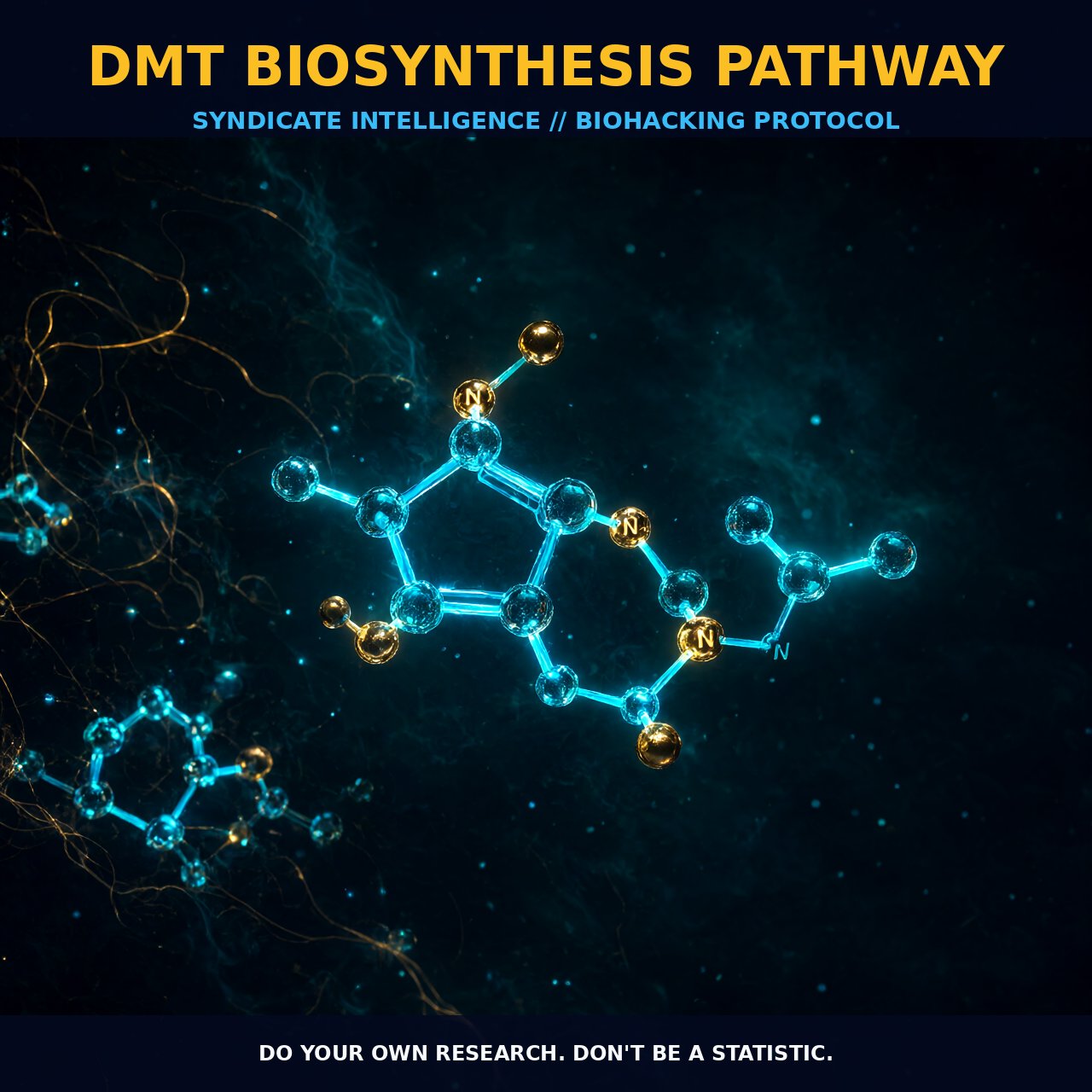
DMT, or N,N-Dimethyltryptamine, is an endogenous hallucinogen synthesized from tryptophan, a common dietary amino acid. The biosynthesis of DMT involves a two-step enzymatic process: initially, tryptophan is converted to tryptamine by aromatic L-amino acid decarboxylase (AADC).
Tryptamine then undergoes dimethylation to form N-methyltryptamine (NMT) and subsequently DMT through the action of indolethylamine N-methyltransferase (INMT), using S-adenosylmethionine (SAM) as the methyl donor. This biosynthetic pathway is not confined to mammals but is also functional in plants, indicating a broad evolutionary significance.
The INMT enzyme is predominantly expressed in the lungs, which exhibit the highest levels of INMT activity compared to other tissues. Additionally, INMT is present in various brain regions and is elevated in the placenta from various species, suggesting a role in development and maturation. The Km values for INMT vary between species and tissues, with the brain enzyme in rats having a Km of 28 uM for tryptamine, while the lung enzyme in rabbits has a significantly higher Km of 270 uM, indicating potential isoforms with different substrate affinities.
2. Biological Impact
DMT's biological impact is primarily mediated through its interaction with serotonin receptors, particularly the 5-HT1A and 5-HT2A subtypes. These receptors are widely distributed in the brain and are crucial for various neurological functions, including mood regulation, cognition, and perception.
The affinity of DMT for these receptors is notably high, with Ki values at the 5-HT1A and 5-HT2A receptors being 183 nM and 127 nM, respectively. This binding affinity suggests that DMT can exert potent effects on neuronal activity by modulating cAMP signaling pathways and calcium influx, thereby influencing neurotransmitter release and synaptic plasticity.
The rapid metabolism of DMT by monoamine oxidase (MAO) ensures a dynamic and localized action, allowing for rapid onset and short duration of its effects. This makes DMT a powerful neuromodulator that can influence neural pathways involved in eliciting hallucinations and altering consciousness. Additionally, the presence of DMT in the pineal gland and its biosynthesis in various brain regions highlights its potential role as a neurotransmitter or neurohormone, potentially influencing brain function and development.
3. Tactical Implementation
When considering the tactical implementation of DMT, understanding its dosing and timing is crucial. Research suggests that exogenous administration of DMT, whether intramuscularly or through smoking, results in rapid metabolism and clearance, with only a small fraction of the dose remaining in the body.
DMT dosages typically range from 10 to 60 mg, with higher doses providing a more intense and prolonged experience. The rapid onset of DMT's effects, peaking within 10 to 15 minutes, makes it ideal for short, targeted sessions. Timing the administration of DMT around periods of high neuronal activity or stress may enhance its neuromodulatory effects.
Stacking DMT with compounds like 5-HT2A agonists or MAO inhibitors can amplify its impact by modulating receptor activity and extending its half-life. For instance, combining DMT with a low dose of a 5-HT2A agonist like LSD can synergistically enhance the psychedelic experience. However, due to the rapid metabolism of DMT, it is essential to ensure that doses are spaced appropriately to maximize its impact without inducing tolerance.
Prostar Life Hack
Timing the administration of DMT around periods of high neuronal activity or stress can enhance its neuromodulatory effects.
[ AUTHOR: LEAD TECHNICAL RESEARCHER ]