
Enhancing Memory with Nootropics
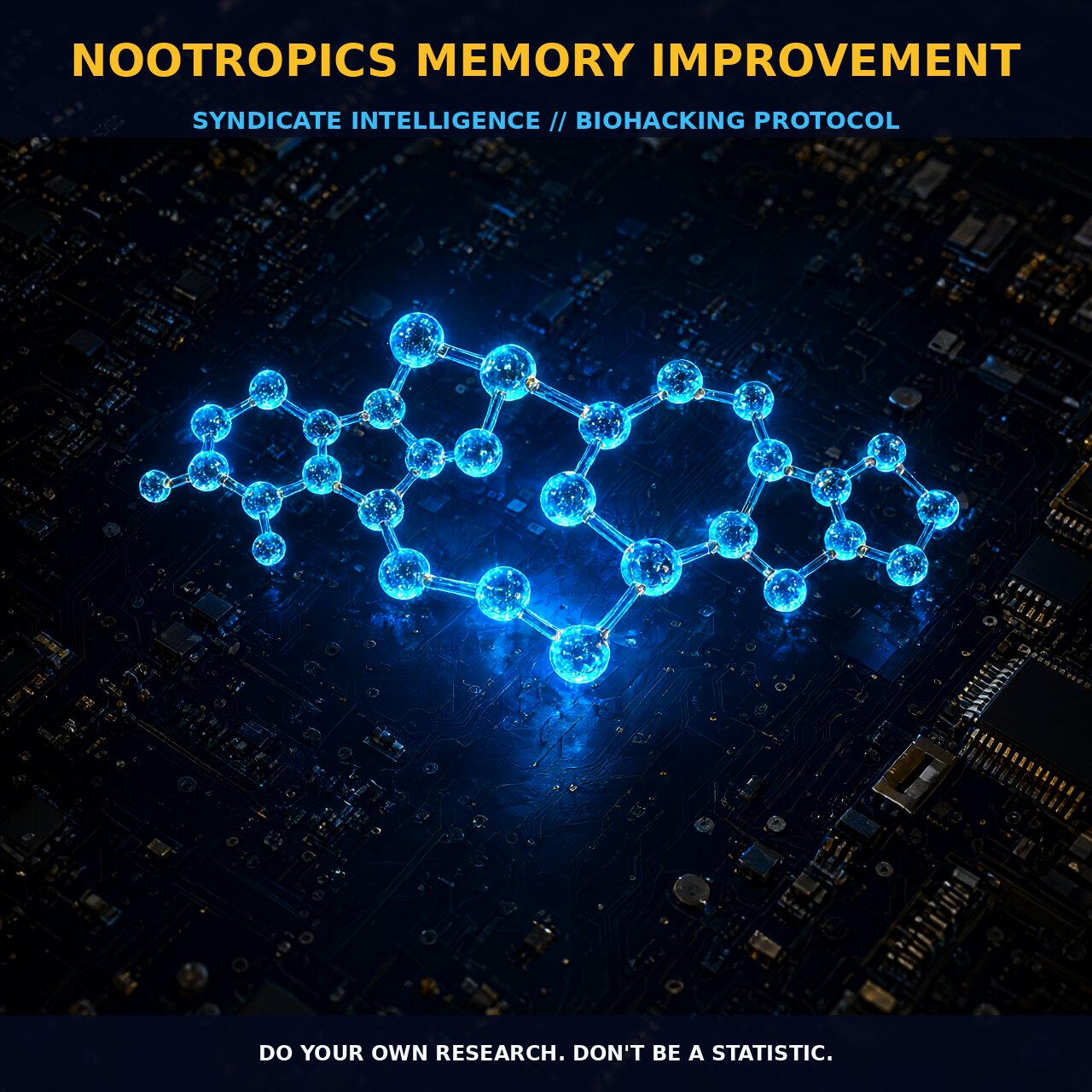
1. The Mechanism
Nootropics are a diverse class of substances designed to enhance cognitive functions, including memory. They work by modulating various neurotransmitter systems, enhancing neural plasticity, and supporting overall brain health. One of the primary mechanisms by which nootropics improve memory involves their impact on cholinergic and glutamatergic pathways.
Cholinergic pathways are crucial for attention and memory, and nootropics like CDP-Choline (Citicoline) and L-Tyrosine support these pathways by increasing acetylcholine levels in the brain. Acetylcholine is a neurotransmitter that plays a key role in memory formation and retrieval.
Additionally, nootropics like DHA and Phosphatidylserine promote neuronal health by providing essential fatty acids and phospholipids that are vital for synaptic function and membrane integrity. These compounds also influence neuroplasticity, the ability of the brain to form new neural connections, which is critical for learning and memory consolidation.
Another key mechanism involves the modulation of glutamatergic pathways. Glutamate is a primary excitatory neurotransmitter involved in synaptic plasticity and long-term potentiation, which are the neurobiological processes underlying memory formation. Nootropics such as Ampakines and compounds that activate the AMPA receptors can enhance glutamate signaling, thereby facilitating synaptic communication and plasticity.
Furthermore, nootropics like PQQ (Pyrroloquinoline Quinone) and Pine Bark Extract act as antioxidants, protecting neurons from oxidative stress and free radical damage, which can impair cognitive function over time. By reducing oxidative stress, these nootropics can support the maintenance of healthy neural function and enhance the resilience of the brain against age-related cognitive decline.
2. Biological Leverage
Nootropics exert their effects on memory through several biological pathways. One of the most significant is the cholinergic system, which is crucial for cognitive functions such as attention and memory. The cholinergic system relies on acetylcholine, a neurotransmitter that is synthesized from choline. By providing choline precursors like CDP-Choline (Citicoline) and L-Tyrosine, nootropics can enhance the synthesis and availability of acetylcholine in the brain. This increased acetylcholine supports better neural communication and strengthens the synaptic connections involved in memory formation and retrieval.
Additionally, nootropics can improve the integrity of the neural membranes by supplying phospholipids, such as those found in Phosphatidylserine. Healthy membranes are essential for the proper functioning of neurotransmitter receptors and ion channels, which are critical for synaptic transmission and plasticity.
Another critical pathway is the glutamatergic system, which is responsible for excitatory neurotransmission and plays a pivotal role in synaptic plasticity and learning. Nootropics like Ampakines can modulate the AMPA receptors, enhancing the postsynaptic response to glutamate. This increased glutamatergic activity promotes the strengthening of synapses, a process known as long-term potentiation, which is a hallmark of memory consolidation.
Furthermore, nootropics can support the health and longevity of neurons through antioxidant and anti-inflammatory mechanisms. For instance, PQQ and Pine Bark Extract have been shown to protect neurons from oxidative stress and inflammation, which are detrimental to cognitive function. By maintaining a healthy neurochemical environment, these nootropics can support the integrity and resilience of neural networks, enhancing the brain's capacity for learning and memory.
3. Tactical Implementation
To implement a nootropic stack for memory improvement, one should consider a combination of cholinergic and glutamatergic enhancers, along with antioxidants and neuroprotective agents. A typical stack might include CDP-Choline (Citicoline), L-Tyrosine, DHA, Phosphatidylserine (PS), Pine Bark Extract, PQQ, and vitamins B1, B9, and B12.
CDP-Choline can be taken in low-to-moderate amounts, around 250-500 mg per day, to enhance acetylcholine synthesis and improve memory. L-Tyrosine can be added in similar doses, around 500-1000 mg, to support neurotransmitter synthesis and cognitive function. DHA, an essential omega-3 fatty acid, can be taken in doses of 200-500 mg to support neuronal membrane health and function.
Phosphatidylserine can be dosed at 100-300 mg to enhance synaptic plasticity and cognitive performance. Pine Bark Extract and PQQ should be included in doses of 50-100 mg and 10-20 mg, respectively, to provide antioxidant protection and support cellular energy metabolism. B vitamins, particularly B1, B9, and B12, should be taken in combination to support the methylation cycle and neurotransmitter synthesis.
Prostar Life Hack
To optimize memory, combine CDP-Choline (250-500 mg), L-Tyrosine (500-1000 mg), DHA (200-500 mg), Phosphatidylserine (100-300 mg), Pine Bark Extract (50-100 mg), PQQ (10-20 mg), and B vitamins (50-100 mg B1, 400-800 mcg B9, 100-200 mcg B12). Take in the morning or early afternoon for sustained cognitive benefits.
[ AUTHOR: LEAD TECHNICAL RESEARCHER ]