
Nicotines Impact on Attention and Cognitive Performance
The Mechanism
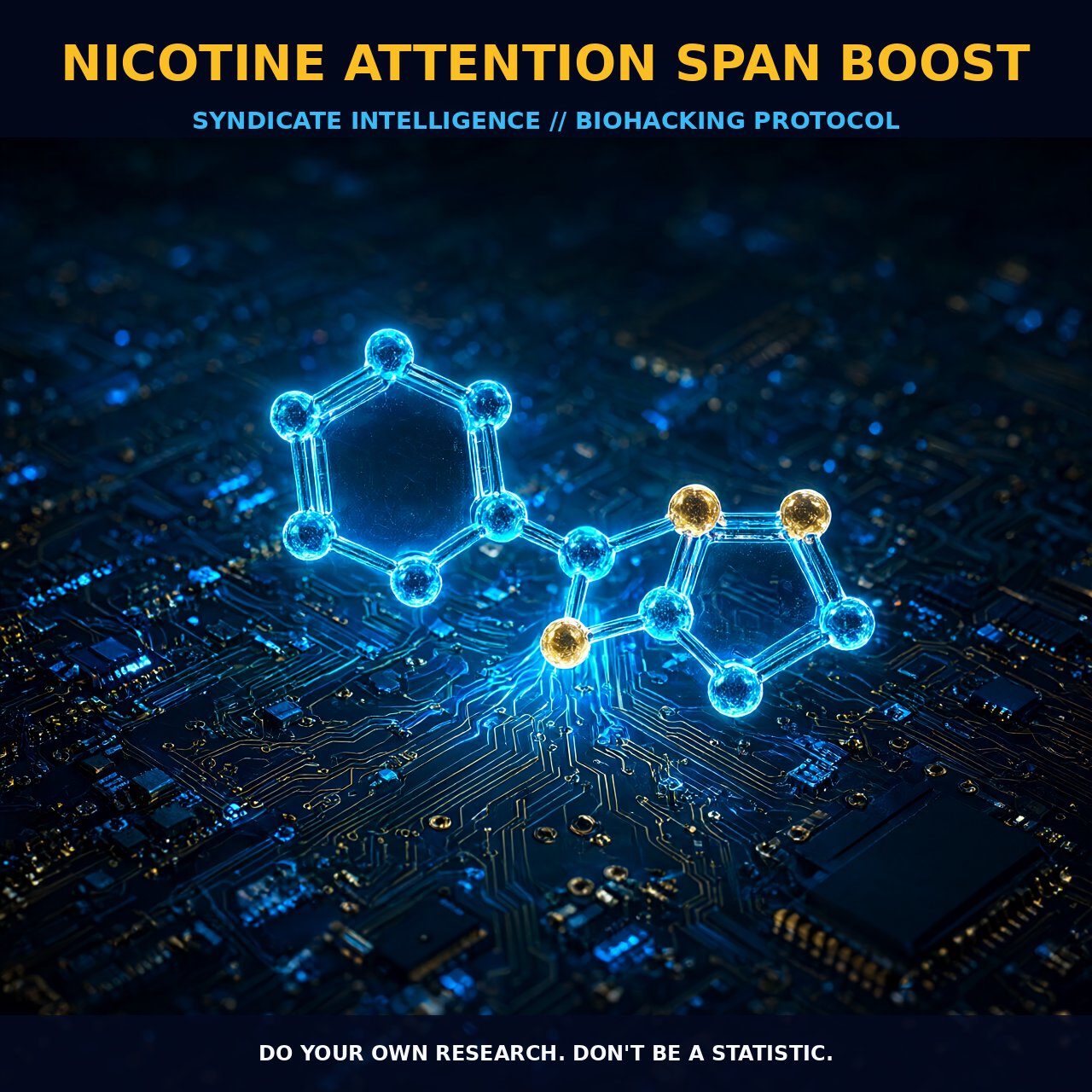
Nicotine, a potent parasympathomimetic alkaloid derived from the tobacco plant and related species, exerts its effects through its interaction with nicotinic acetylcholine receptors (nAChRs) in the brain. When nicotine enters the system, it binds to these receptors, activating a cascade of intracellular signaling pathways that influence various cognitive functions.
Specifically, nicotine activates the mesolimbic dopamine system, which is responsible for the reward and pleasure pathways in the brain. This activation leads to increased dopamine levels, which enhance cognitive functions such as attention, memory, and motor skills. Additionally, nicotine modulates the release of other neurotransmitters like glutamate and noradrenaline, further contributing to its cognitive enhancing effects.
These effects are mediated through the regulation of nAChRs and the subsequent activation of dopamine pathways. The enhanced vigilance and attention seen with nicotine use are particularly pronounced due to the increased activity in the prefrontal cortex, a region crucial for executive functions and attentional processes. Nicotine's influence on the prefrontal cortex enhances the brain's ability to filter out irrelevant stimuli, thereby improving focus and attentional control.
Biological Leverage
Nicotine's cognitive enhancing effects are primarily attributed to its modulation of the cholinergic system and the activation of dopamine pathways. The cholinergic system plays a critical role in cognitive functions such as attention, memory, and executive function. By binding to nAChRs, nicotine enhances the activity of this system, leading to improved cognitive performance.
Research has shown that chronic nicotine exposure can induce long-lasting facilitation of long-term potentiation (LTP) in the amygdala, a brain region involved in emotional and memory processing. This facilitation of LTP is pathway-specific and can lead to enhanced memory and learning capabilities. Additionally, nicotine has been shown to induce high-amplitude gamma synchrony in long-term meditators, indicating its role in enhancing neural synchrony and cognitive performance.
The modulation of nAChRs by nicotine also influences the release of glutamate, a key excitatory neurotransmitter involved in synaptic plasticity and learning.
Tactical Implementation
To effectively leverage nicotine for attention span enhancement, it is crucial to understand the optimal dosing and delivery methods. Nicotine can be administered through various means, including patches, gum, lozenges, and injections. Oral delivery methods, such as nicotine gum and lozenges, offer the advantage of avoiding lung interactions and provide a steady release of nicotine over time. A typical dose for cognitive enhancement ranges from 1-2 mg, which is sufficient to activate nAChRs and enhance cognitive functions without leading to significant side effects.
Timing is also an important consideration. Nicotine has a half-life of approximately 2 hours, and its effects peak within 30-60 minutes after administration. Therefore, it is advisable to take nicotine 30-60 minutes before engaging in tasks that require heightened attention and focus. For optimal cognitive performance, it is recommended to use nicotine on an as-needed basis, rather than daily, to avoid the potential for habituation and tolerance.
Stacking nicotine with other cognitive enhancers can also amplify its effects. Combining nicotine with caffeine, for example, can enhance the suppression of appetite and improve cognitive performance. Caffeine can potentiate the effects of nicotine by increasing dopamine release and enhancing cognitive arousal. Additionally, using nicotine in conjunction with nootropics like piracetam or nefiracetam can further enhance cognitive functions such as memory and attention.
Prostar Life Hack
Take nicotine 30-60 minutes before engaging in tasks that require heightened attention and focus. Use nicotine on an as-needed basis to avoid habituation and tolerance.
[ AUTHOR: LEAD TECHNICAL RESEARCHER ]