
Nicotine Cognitive Enhancement Protocol
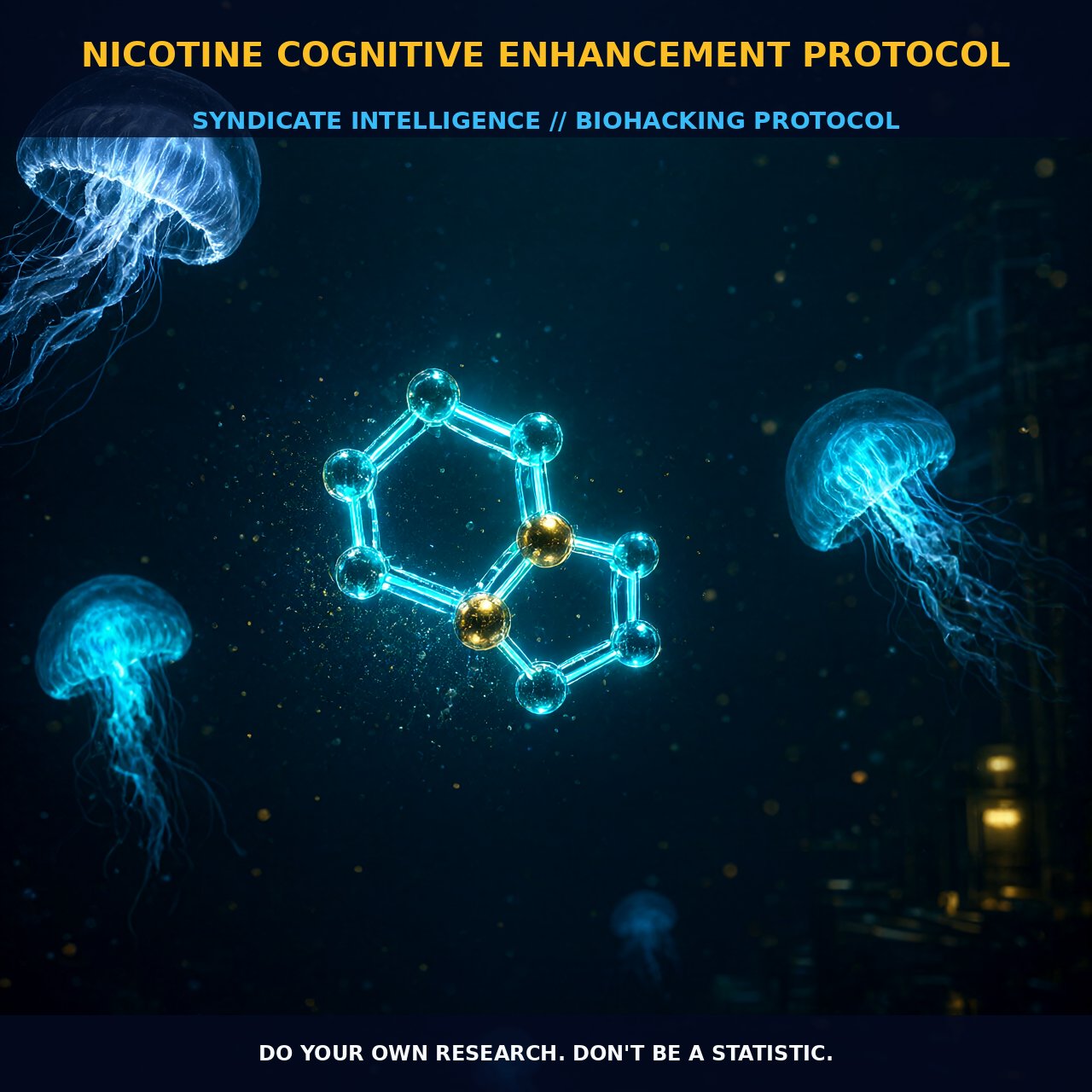
1. The Mechanism
Nicotine, a potent parasympathomimetic alkaloid derived from the tobacco plant, has garnered attention for its cognitive enhancement properties. It acts primarily by binding to nicotinic acetylcholine receptors (nAChRs) in the brain, which are integral to various neurotransmitter systems. The activation of these receptors leads to the modulation of several key pathways, including those involving dopamine, which is crucial for reward and motivation.
Professor Jennifer Rusted from Sussex University emphasizes that nicotine is a reliable cognitive enhancer due to its ability to modulate these pathways effectively. Nicotine binding to nAChRs stimulates the release of neurotransmitters such as dopamine, acetylcholine, and norepinephrine. This stimulation enhances synaptic plasticity, leading to improved cognitive functions. Nicotine also modulates the activity of other neurotransmitter systems, such as the glutamatergic system, which is critical for synaptic plasticity and learning.
By enhancing the release of glutamate, nicotine can facilitate long-term potentiation (LTP), a process that underlies learning and memory formation. Additionally, nicotine has been shown to activate pathways specific to the amygdala, which plays a crucial role in emotional processing and memory.
2. Biological Leverage
Nicotine exerts its cognitive enhancing effects through multiple biological mechanisms. One of the primary mechanisms is the activation of nAChRs, which are distributed throughout the brain and play a significant role in cognitive processes. The binding of nicotine to nAChRs leads to the activation of downstream signaling cascades, including the cyclic AMP (cAMP) pathway. This activation results in the phosphorylation of various proteins, including those involved in synaptic plasticity and neurotransmitter release.
For instance, nicotine can enhance the activity of protein kinase A (PKA), which is involved in the phosphorylation of the α-amino-3-hydroxy-5-methyl-4-isoxazolepropionic acid receptor (AMPAR) and the N-methyl-D-aspartate receptor (NMDAR), thereby modulating synaptic strength and plasticity. Moreover, nicotine influences the release of dopamine, a neurotransmitter pivotal for reward and motivation. By activating dopamine release, nicotine enhances attention and vigilance, which are crucial for cognitive tasks.
Additionally, nicotine enhances the activity of the glutamatergic system, which is essential for synaptic plasticity and learning. This enhancement is achieved through the facilitation of LTP in the hippocampus and amygdala, regions critical for memory formation and emotional processing. Nicotine also suppresses appetite, which can be beneficial for individuals seeking to manage their weight. This effect is mediated by the activation of nAChRs in the hypothalamus, a region involved in regulating appetite.
By modulating the activity of these receptors, nicotine reduces the release of hunger-stimulating hormones, such as ghrelin, and increases the release of satiety signals, such as leptin. Furthermore, nicotine has been shown to improve motor skills and reaction time, contributing to enhanced performance in tasks requiring coordination and rapid response.
3. Tactical Implementation
The implementation of a nicotine cognitive enhancement protocol requires careful consideration of dosage, timing, and stacking. Nicotine patches and gum are preferred over smoking due to their controlled release and avoidance of harmful additives. Oral delivery methods, such as gum and patches, provide a slow and steady release of nicotine, which allows for sustained cognitive enhancement without the euphoric rush associated with smoking. The typical dosage range for cognitive enhancement is low-to-moderate, with doses ranging from 1 mg to 4 mg per session. These doses are generally well-tolerated and can be administered every 1-2 hours for sustained effects.
Timing is also crucial for optimal cognitive enhancement. Nicotine has a half-life of approximately 1-2 hours, making it ideal for use during peak cognitive tasks. For instance, using nicotine in the morning or mid-afternoon can enhance focus and memory for several hours, without interfering with nighttime sleep. Combining nicotine with caffeine can further enhance cognitive benefits, as both compounds share similar mechanisms of action but have complementary effects. Caffeine can potentiate the effects of nicotine on attention and vigilance, while nicotine can enhance the cognitive benefits of caffeine, such as improved memory and reaction time.
Stacking nicotine with other nootropics can provide synergistic effects. For example, combining nicotine with piracetam or nefiracetam can enhance cognitive performance by modulating different neurotransmitter systems. Piracetam, a racetam nootropic, enhances cognitive function by modulating acetylcholine levels, while nefiracetam enhances NMDA receptor activity. Together, these compounds can provide a comprehensive cognitive enhancement protocol. Additionally, using nicotine in conjunction with L-theanine, a calming amino acid, can mitigate any jittery or anxious effects associated with nicotine use, providing a balanced and sustained cognitive enhancement.
Prostar Life Hack
Use nicotine patches or gum in the morning or mid-afternoon for sustained cognitive enhancement. Combine with caffeine for enhanced effects, and stack with nootropics like piracetam for a comprehensive cognitive boost.
[ AUTHOR: LEAD TECHNICAL RESEARCHER ]