
agmatine sulfate neuroprotection
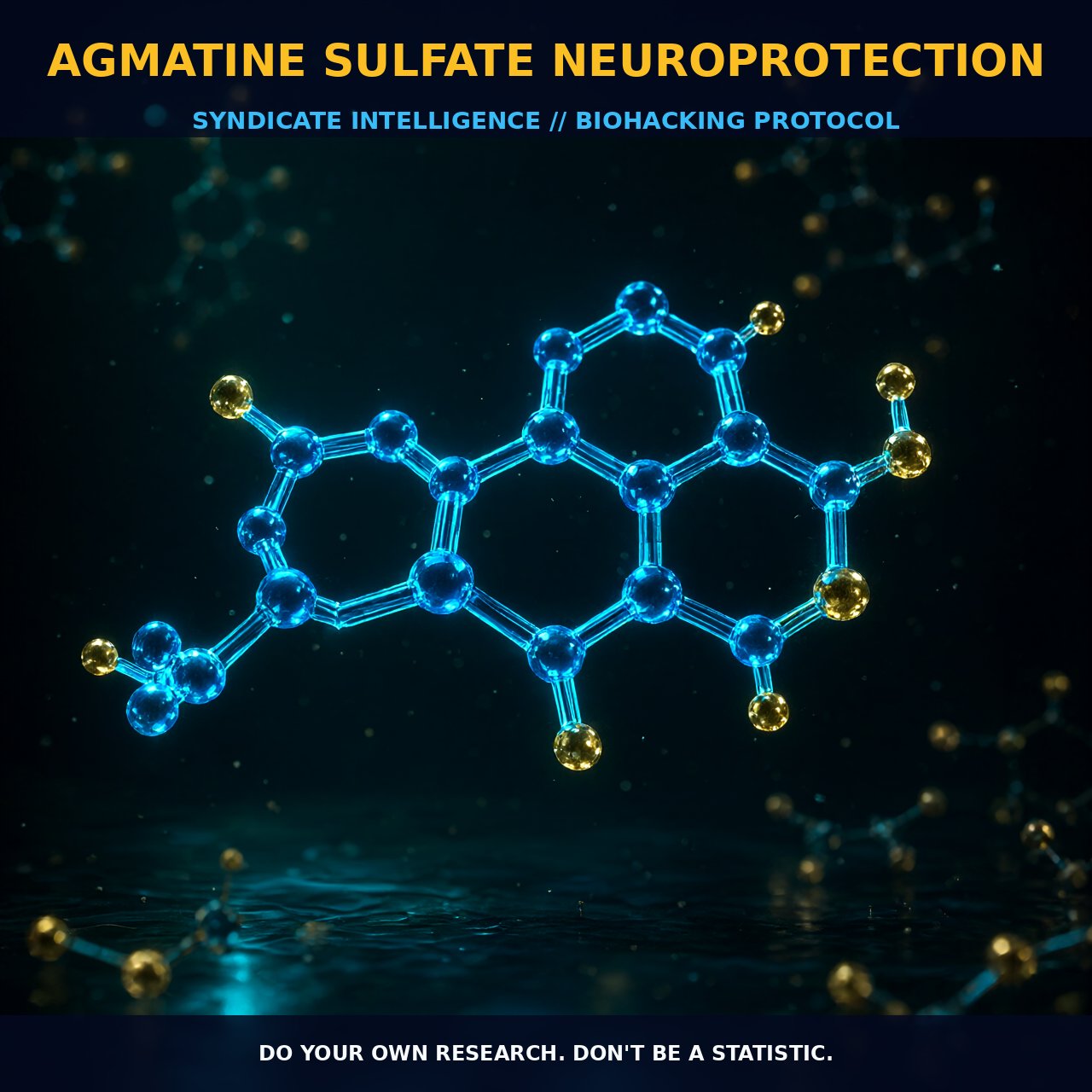
THE MECHANICS
Agmatine operates as a multifaceted neuromodulator derived from L-arginine via the enzymatic action of arginine decarboxylase, functioning primarily as a polyamine within the central nervous system. Its primary pharmacological leverage lies in its ability to modulate glutamatergic transmission by acting as an antagonist at NMDA receptors, which effectively curtails excitotoxicity and prevents neuronal death during excessive stimulation. Simultaneously, agmatine serves as an agonist at alpha-2 adrenergic and imidazoline binding sites, a dual-action profile that allows it to regulate catecholamine release and influence sympathetic outflow without inducing drastic physiological shifts.
Beyond receptor modulation, agmatine functions as a potent inhibitor of nitric oxide synthase, thereby controlling the production of nitric oxide and preventing the formation of reactive nitrogen species that contribute to cellular stress. It further stabilizes the cellular environment by inhibiting ADP ribosylation and blocking ATP-sensitive potassium and voltage-gated calcium channels, which helps maintain membrane potential integrity during metabolic strain. This complex interplay of ion channel regulation and enzyme inhibition positions agmatine not merely as a neurotransmitter precursor but as a critical regulator of synaptic plasticity and overall neuronal health.
BIOLOGICAL LEVERAGE
The neuroprotective capacity of agmatine extends deep into the mitochondrial machinery, where it acts as a free radical scavenger to preserve membrane potential and protect against oxidative damage induced by agents like rotenone. By mitigating oxidative stress, agmatine suppresses the activation of NF-kappa B, a key transcription factor involved in inflammation and cell death pathways, thereby reducing apoptotic signaling in neuronal cell lines. This mitochondrial resilience is particularly vital for aging brains and those subjected to chronic insults, as it supports cellular survival mechanisms and maintains energy homeostasis under conditions of hypoxic or glucose deprivation.
Agmatine also exhibits significant anxiolytic and antidepressant properties, largely through its modulation of nitrergic signaling pathways and interaction with the gut microbiome, which may influence systemic inflammation and neural feedback loops. Its ability to regulate insulin release further contributes to neuroprotection, suggesting a metabolic link between polyamine levels and glucose handling in brain tissue. Preclinical evidence indicates that exogenous agmatine can counteract corticosteroid-induced neurotoxicity and protect retinal ganglion cells, highlighting its broad utility in managing both acute injuries like traumatic brain events and chronic conditions associated with neuronal decline.
TACTICAL IMPLEMENTATION
For those integrating agmatine sulfate into a nootropic stack, the compound demonstrates a favorable safety profile even at high daily dosages over extended periods, as evidenced by long-term human case reports spanning five years. While precise therapeutic windows for specific pathologies are still being refined, the general approach involves leveraging its multi-receptor activity to support mood stability and cognitive function without the heavy sedation often associated with alpha-2 agonists. It pairs well with other neuroprotective agents that target oxidative stress or glutamate regulation, offering a synergistic effect on neural resilience.
The pharmacokinetics of exogenous agmatine suggest that it is readily absorbed and distributed, acting as a therapeutic element that can trigger protective responses against chronic stress when combined with existing treatment strategies. Human dosing data supports the use of agmatine sulfate as a durable dietary ingredient, with studies confirming its genotoxic safety and ability to promote resilient neural outcomes. Future protocols will likely refine the timing of supplementation to align with peak endogenous fluctuations or specific cognitive demands, but current evidence strongly favors its inclusion as a foundational agent for long-term brain health optimization.
Do your own research. Don't be a statistic.
Prostar Life Hack
For those integrating agmatine sulfate into a nootropic stack, the compound demonstrates a favorable safety profile even at high daily dosages over extended periods, as evidenced by long-term human case reports spanning five years.
[ AUTHOR: LEAD TECHNICAL RESEARCHER ]