
Mesolimbic Activation: Pharmacokinetic Optimization of Nicotine for
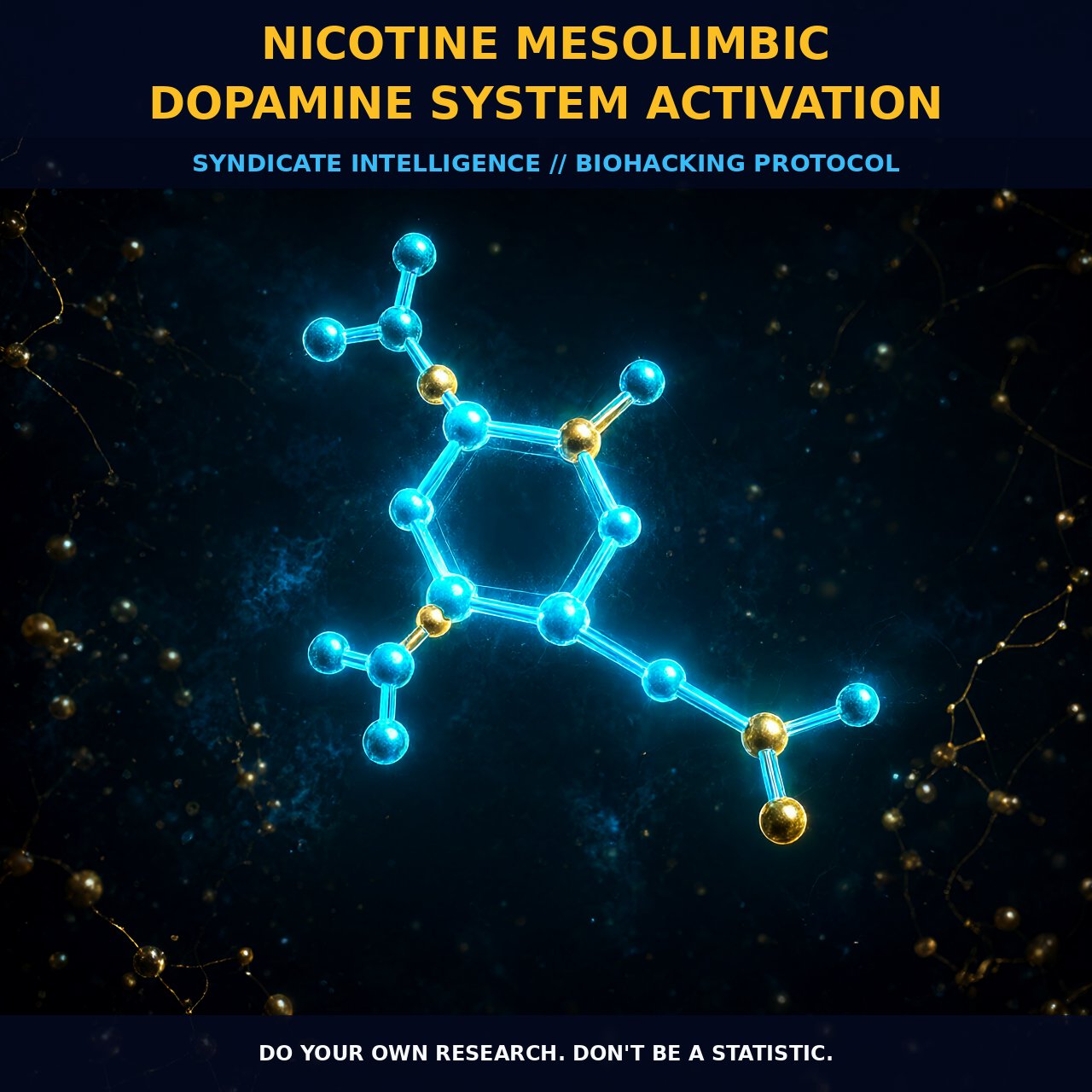
1. The Mesolimbic Mechanism
Nicotinic acetylcholine receptors serve as the primary gateway for cognitive optimization, acting as targeted agonists within the central nervous system. Unlike traditional nootropics that rely on slow accumulation, nicotine demonstrates a rapid pharmacokinetic profile, binding to specific receptor subtypes to trigger immediate downstream signaling cascades. This dynamic activation refines motor skills, heightens attentional capacity, and accelerates reaction times through a sophisticated balance of cholinergic input and dopamine release.
The physiological impact is heavily mediated through the mesolimbic dopamine system, originating in the ventral tegmental area and projecting to the nucleus accumbens. This dual-action profile creates a state of calm alertness, suppressing appetite while enhancing cognitive clarity without the jittery overstimulation typical of pure catecholamine boosters. Crucially, nicotine regulates these pathways independently of the complex additive cocktails found in tobacco, allowing for precise modulation of reward-seeking behavior and memory consolidation.
2. Biological Leverage & Cellular Adaptation
Beyond immediate cognitive enhancement, nicotine acts as a potent modulator of long-term potentiation (LTP) via nicotinic cholinergic mechanisms. This facilitates synaptic plasticity essential for learning and memory retention, with chronic exposure inducing pathway-specific facilitation within the amygdala to support emotional regulation and stress resilience.
At the cellular level, nicotine influences peroxisome proliferator-activated receptor gamma coactivator 1-alpha (PGC-1α), the master regulator of mitochondrial biogenesis. This interaction promotes the growth of new mitochondria, providing an anti-aging mechanism that parallels the benefits of rigorous physical exercise. Furthermore, its antioxidant properties protect neural tissue from oxidative stress and degeneration, sustaining dopaminergic neurons critical for motor control and executive function.
3. Tactical Implementation
Optimal biohacking requires careful selection of the administration route to control delivery speed and addiction risk. Slow-release patches, low-dose gum, mouth sprays, and lozenges provide controlled release profiles that avoid the sharp spikes associated with smoking or vaping. These methods reduce addictive potential while maintaining sustained nootropic benefits, making them superior to injections which carry higher risks of acute peak effects.
Dosage should be calibrated to leverage nicotine’s one-to-two-hour half-life, allowing for strategic dosing later in the day without disrupting sleep architecture. Pilot trials indicate significant cognitive support at daily intakes around fifteen milligrams of pure isolate. When combined with caffeine, this protocol may further suppress appetite and extend focused energy states, provided users remain within the therapeutic window to avoid receptor downregulation.
4. Prostar Life Hack
Prioritize Pure Isolates via Transdermal Routes: To maximize cognitive clarity while minimizing addictive habituation, switch from smoked or vaped nicotine to sublingual or transdermal pure isolates. Aim for a steady 15mg daily intake to stabilize dopamine tones rather than flooding them, ensuring sustained motivation and motor refinement without the jitteriness of catecholamine spikes.
Prostar Life Hack
Prioritize Pure Isolates via Transdermal Routes: To maximize cognitive clarity while minimizing addictive habituation, switch from smoked or vaped nicotine to sublingual or transdermal pure isolates. Aim for a steady 15mg daily intake to stabilize dopamine tones rather than flooding them, ensuring sustained motivation and motor refinement without the jitteriness of catecholamine spikes.
[ AUTHOR: LEAD TECHNICAL RESEARCHER ]