
Mitragynine & 7-Hydroxymitragynine: Alkaloid Pharmacokinetics and
1. The Molecular Architecture
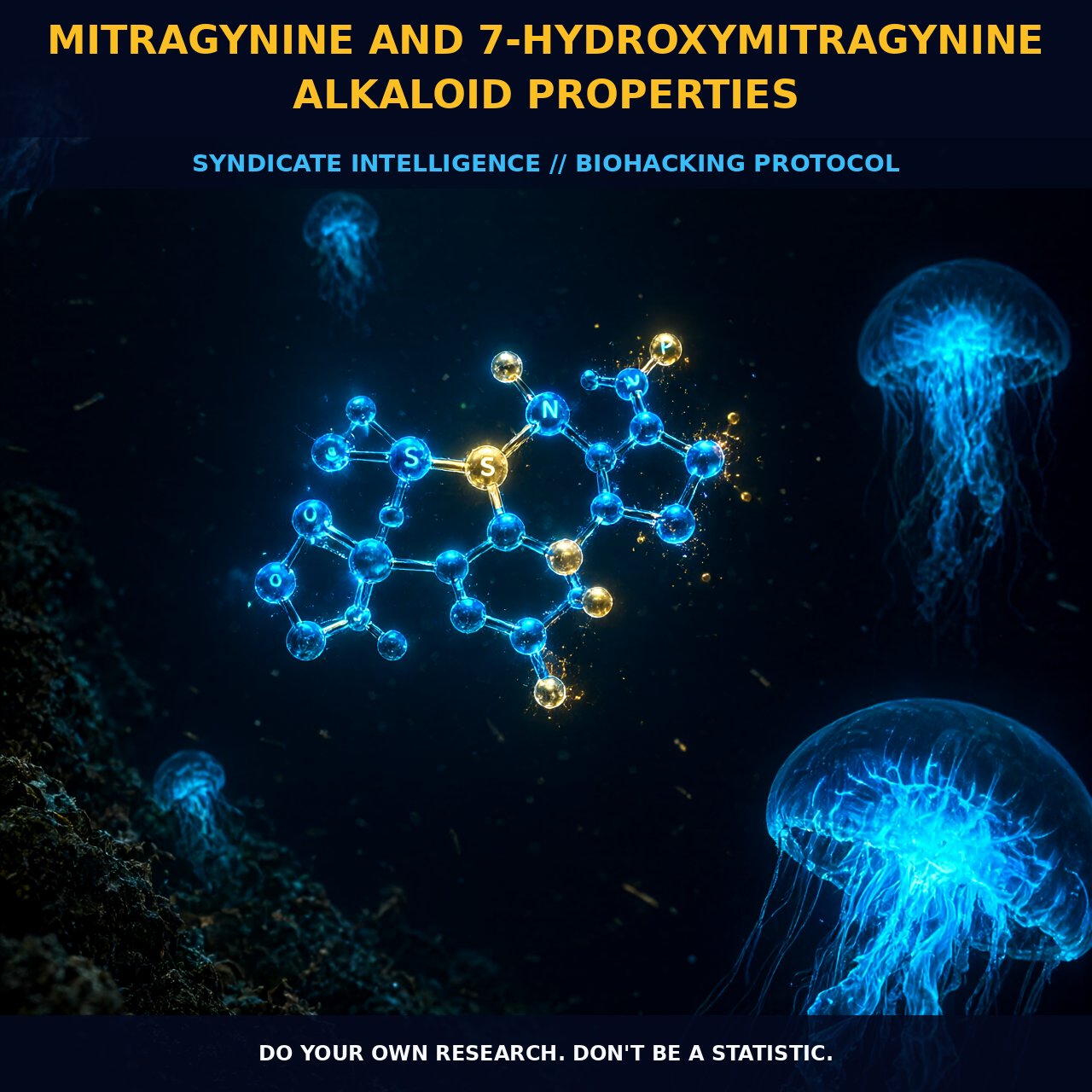
Mitragyna speciosa operates as a complex pharmacological engine, with mitragynine serving as its primary driver. Representing 2% of dry leaf weight and contributing up to 66% of the total alkaloid load, this indole alkaloid (C23H30N2O4) possesses a molecular weight of 398.5 g/mol. Its distinct octanol:water partition coefficient (logP 1.7) and ionization constant (pKa 8.1) dictate superior membrane permeability.
Unlike traditional opioids derived from the Papaveraceae family, mitragynine engages narcotic-like pathways through a unique receptor binding signature. This structural integrity, confirmed by X-ray crystallography, allows it to act as an atypical opioid, providing symptomatic relief while maintaining a different biological profile.
Complementing this is 7-hydroxymitragynine, the potent secondary driver. Though comprising less than 0.02% of dry weight, its psychoactive potency is disproportionate to its abundance. Together, these two alkaloids form the critical markers for clinical observation, with their concentration ratios influenced by soil calcium, magnesium, and harvest seasonality.
2. Biological Leverage & Receptor Modulation
The physiological impact of this phytochemical matrix is mediated through opioid receptor modulation, delivering benefits across both analgesic and stimulant domains. Mitragynine exhibits dose-dependent biphasic properties: low-to-moderate doses enhance alertness, while higher doses engage deeper narcotic pathways.
Six major alkaloids—including mitraphylline, speciociliatine, speciogynine, and paynantheine—contribute to a broad spectrum of central nervous system activity. This multi-alcohol profile supports self-treatment protocols for pain management and opioid withdrawal without the severe respiratory depression associated with conventional opioids.
Animal models have revealed bidirectional effects on breathing, suggesting a safer respiratory profile for mitragynine under various physiological states. Furthermore, its specific interaction with receptor subtypes supports metabolic and neurological homeostasis, positioning it as a candidate for sustained optimization rather than acute symptom masking.
3. Protocol Implementation
Effective utilization of M. speciosa requires navigating its natural variance. Users should prioritize products that account for the 12% to 66% variability in total alkaloid content inherent to different strains. The structural stability of mitragynine, with a melting point of 104 °C and boiling point of 235 °C, ensures that standard extraction methods preserve pharmacological integrity.
Due to the complexity of the alkaloidal matrix, a conservative approach involving gradual titration is advisable. Timing plays a crucial role; because lower doses exhibit stimulant properties, morning administration supports cognitive function and energy expenditure without disrupting sleep architecture. Conversely, evening dosing at higher quantities may better facilitate analgesic benefits.
For the serious biohacker, batch-to-batch consistency is paramount. Monitoring the balance between mitragynine and 7-hydroxymitragynine dictates the overall bioavailability and receptor engagement profile, allowing for precise dose-response management based on individual tolerance and exposure history.
Prostar Life Hack
The Biphasic Titration: Leverage the biphasic nature of mitragynine by starting with lower doses in the morning to capitalize on stimulant properties for cognitive energy, then gradually increasing your dosage to engage deeper analgesic pathways later in the day. This strategy avoids sleep disruption while maximizing receptor modulation.
[ AUTHOR: LEAD TECHNICAL RESEARCHER ]