
Mesolimbic Dopamine Modulation: Optimizing Nicotine’s Nootropic Profile
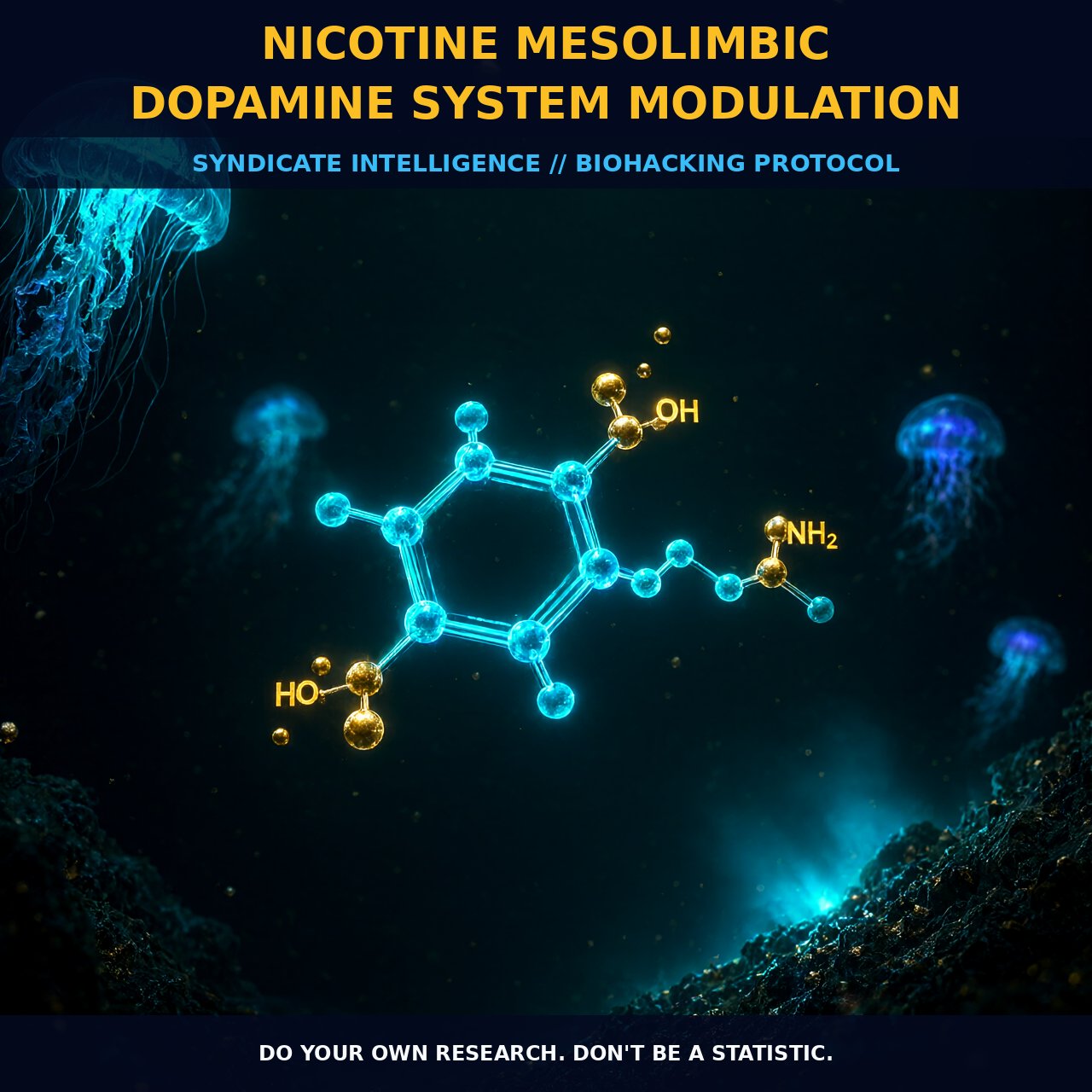
1. The Mesolimbic Mechanism
Nicotine functions as a potent parasympathomimetic alkaloid, binding directly to nicotinic acetylcholine receptors throughout the central nervous system. This interaction triggers an immediate activation of pathways governing attention, memory, and motor function while simultaneously modulating the brain’s pleasure centers. The psychoactive profile is driven by nicotine acting as an agonist for specific receptor clusters in key regions, notably within the mesolimbic dopaminergic system.
The ventral tegmental area (VTA) serves as the epicenter for this reward mediation, with cell bodies projecting to the nucleus accumbens. Crucially, the speed of delivery determines the intensity of the dopamine response; rapid delivery systems create a more pronounced physiological shift than slower alternatives, while chronic exposure induces pathway-specific facilitation of long-term potentiation in the amygdala.
2. Biological Leverage and Neuroplasticity
Beyond simple stimulation, nicotine influences long-term receptor plasticity and cellular energy production. It acts as a brain antioxidant and stimulates mitochondrial biogenesis via the regulation of PGC-1 alpha, the master regulator of this process. This biochemical signaling mirrors the anti-aging effects of physical exercise, supporting metabolic efficiency alongside cognitive function.
The most significant leverage point lies in the precise modulation of the mesolimbic pathway. Nicotine disinhibits dopaminergic neurons by reducing GABAergic interneuron activity, leading to a controlled release of extracellular dopamine. This mechanism supports motor control and provides a calming effect that contrasts sharply with the jittery stimulation of high-dose caffeine, resulting in a refined state of alertness without excessive arousal.
3. Tactical Implementation Protocol
Delivery method is the primary determinant of both efficacy and addiction potential. While smoking and vaping offer express delivery systems with high efficiency, they can lead to rapid tolerance due to quick receptor activation spikes. To optimize nootropic benefits, low-dose options such as slow-release patches, mouth sprays, or gum are preferable, providing a steadier concentration profile in the blood.
Timing must align with nicotine’s short half-life of one to two hours. This flexibility allows for use during late-stage deep work without negatively impacting sleep architecture. A standard protocol involves utilizing low doses during periods of required mental output, capitalizing on appetite suppression and attention enhancement while avoiding the dependency pitfalls associated with high-velocity delivery systems.
4. Prostar Life Hack
For maximum cognitive clarity with minimal addictive liability, switch from rapid-inhalation methods to titrated transdermal or buccal delivery. Use low-dose nicotine specifically during deep work sessions to leverage its appetite-suppressing and memory-consolidating properties, keeping dopamine spikes steady rather than surging.
Prostar Life Hack
Switch from rapid-inhalation methods to titrated transdermal or buccal delivery. Use low-dose nicotine specifically during deep work sessions to leverage its appetite-suppressing and memory-consolidating properties, keeping dopamine spikes steady rather than surging.
[ AUTHOR: LEAD TECHNICAL RESEARCHER ]