
Agmatine Sulfate: NMDA Modulation and Mitochondrial Cytoprotection
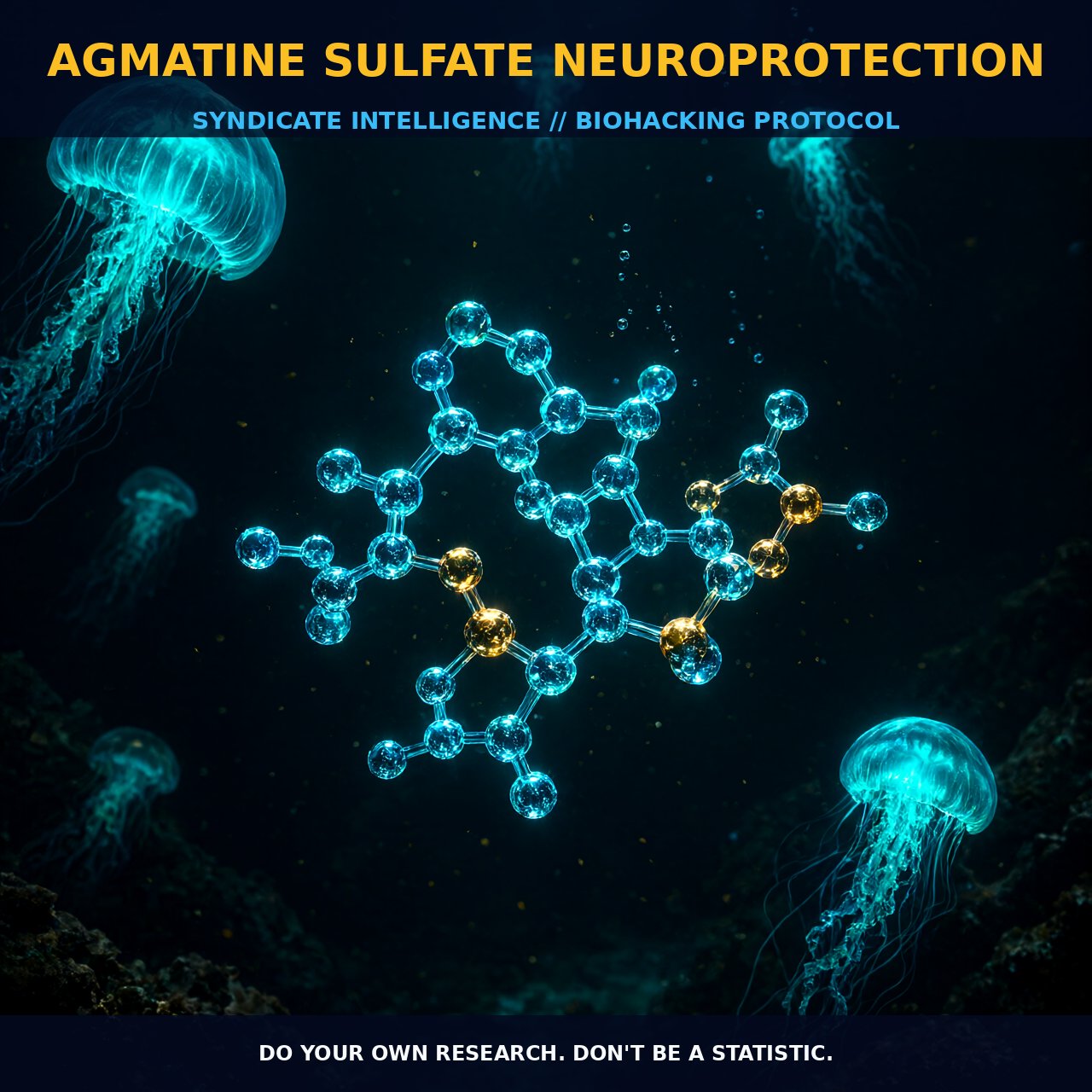
1. The Mechanism
Agmatine sulfate operates as a critical endogenous polyamine and neuromodulator, derived from L-arginine via the enzyme arginine decarboxylase. Its structural affinity allows it to function as a multifaceted neurotransmitter within the central nervous system, serving not merely as a passive metabolite but as an active participant in neural signaling.
At the receptor level, agmatine exhibits a complex pharmacological profile by modulating multiple systems simultaneously. It functions as a glutamatergic antagonist with specific affinity for NMDA receptors, effectively tempering excitotoxicity—a primary driver of neuronal damage. Concurrently, it acts as an agonist at alpha-2 adrenoceptors and binds to imidazoline binding sites, stabilizing the neural environment against stress-induced degradation.
This dual-action capability allows for the fine-tuning of neurotransmitter regulation, metabolism, and reabsorption. By influencing insulin release and regulating polyamine synthesis, agmatine supports synaptic plasticity and underpins the biochemical pathways essential for mood stability, learning, and cognitive function.
2. Biological Leverage
The neuroprotective efficacy of agmatine is rooted in its potent ability to mitigate oxidative stress and preserve mitochondrial integrity. As a powerful free radical scavenger, it shields mitochondria from oxidative damage, leading to the attenuation of apoptotic cell death and the preservation of cellular viability.
Exogenous agmatine triggers a comprehensive protective response that counters physiological markers of chronic stress and neurodegeneration. Preclinical evidence highlights its efficacy against excitotoxicity, ischemic toxicity, and corticosteroid-induced neurotoxicity. Furthermore, by inhibiting nitric oxide synthase (NOS) and ADP ribosylation, it stabilizes cellular environments, significantly reducing the risk of secondary injury following neural trauma.
3. Protocol Implementation
Clinical observations support the use of oral agmatine sulfate at high dosages, with safety profiles established even in long-term regimens extending up to five years. The compound demonstrates favorable pharmacokinetics, ensuring therapeutic levels are effectively reached within the central nervous system.
For practical implementation, practitioners may leverage higher dosage ranges for acute neuroprotection or chronic stress modulation. Its compatibility with existing nootropic stacks makes it particularly valuable for users managing anxiety, depression, and cognitive impairment. Users should note its analgesic and antidepressant properties, which offer additive effects when combined with other mood-supporting compounds.
4. Prostar Life Hack
Stack for Synergy: To maximize neuroprotection and mood stability, take agmatine sulfate consistently to maintain stable endogenous levels. It pairs exceptionally well with other nootropics due to its broad-spectrum cytoprotive action, offering additive analgesic benefits. For those with digestive sensitivities, consider its synergistic interaction with the gut microbiome by pairing it with targeted probiotic strains.
Prostar Life Hack
Stack for Synergy: Take agmatine sulfate consistently to maintain stable endogenous levels. It pairs exceptionally well with other nootropics due to its broad-spectrum cytoprotive action, offering additive analgesic benefits. For those with digestive sensitivities, consider its synergistic interaction with the gut microbiome by pairing it with targeted probiotic strains.
[ AUTHOR: LEAD TECHNICAL RESEARCHER ]