
Kava-GABA-A Receptor Positive Allosteric Modulation and Sleep
1. The Neurochemical Architecture of Kava
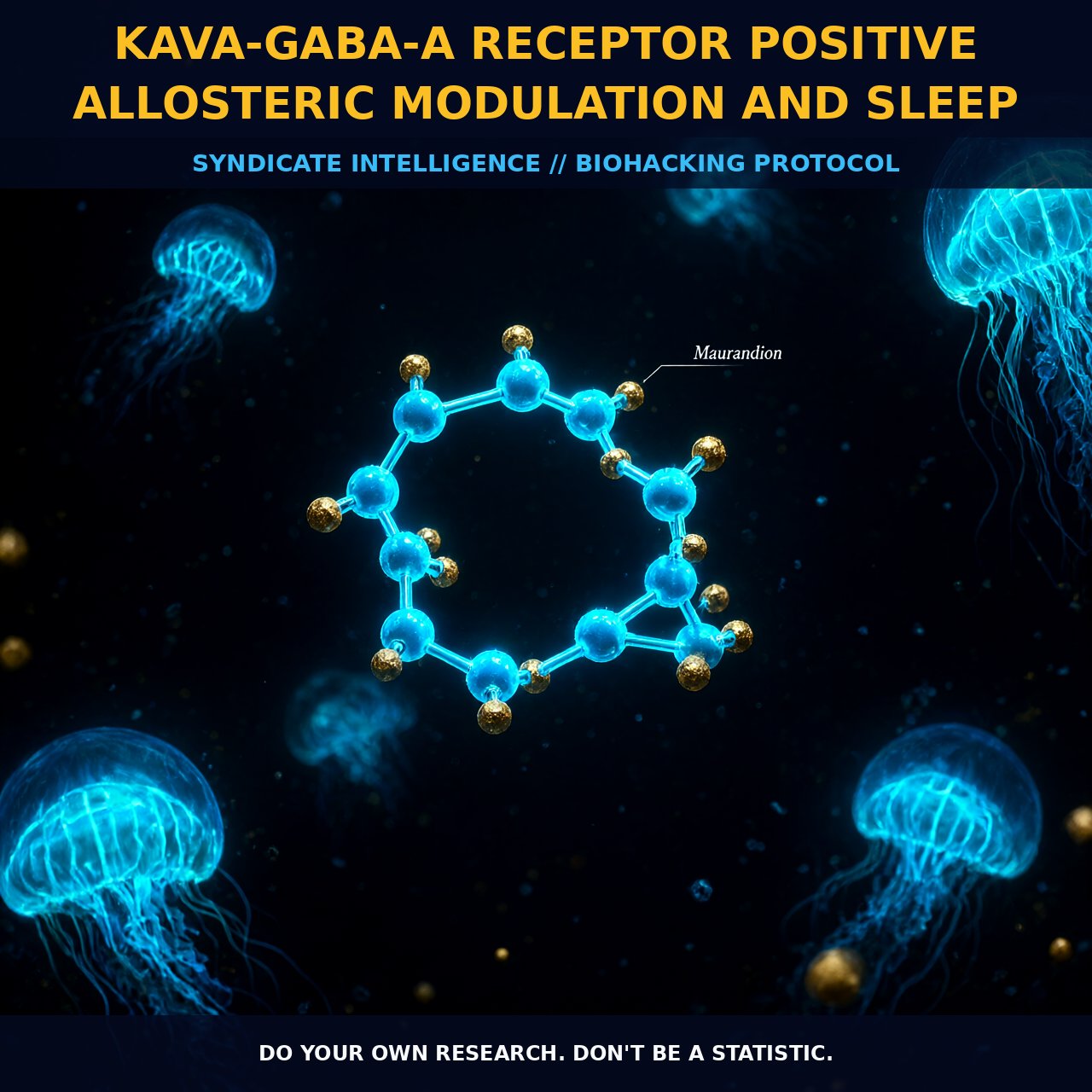
Kava operates as a precise GABA-A receptor positive allosteric modulator, engaging directly with the benzodiazepine site on chloride channels to amplify their responsiveness to endogenous GABA. Unlike displacement agents, this modulation enhances inhibitory drive without displacing GABA, effectively lowering the neural firing threshold and inducing a state of calm. This mechanism establishes a direct parallel with magnesium-induced anxiolytic behavior, suggesting that Kava’s efficacy is rooted in the same foundational pathway.
Crucially, the distinction between receptor subtypes defines the quality of sedation. While alcohol predominantly targets GABA-B receptors and benzodiazepines target GABA-A, Kava aligns selectively with the GABA-A pathway responsible for calming neural activity. This specificity helps restore balance to the glutamate system, which often becomes dysregulated under stress, reducing excitatory noise that leads to fragmented sleep architecture.
2. Biological Leverage and Synergistic Stacking
Magnesium serves as a potent biological lever for Kava, binding to GABA gates to increase their effect and creating a compounded anxiolytic signal. This interaction targets the physiological root of restless sleep states, where tight muscles make the nervous system hypersensitive to external stimuli. Adequate magnesium levels help reverse age-related neuroendocrine changes, providing a stable neuromuscular foundation for Kava’s receptor modulation.
Furthermore, this synergy mitigates hyperarousal by regulating cytokines and cell signaling molecules. By modulating GABA-A receptors and supporting relaxation, Kava helps contain cortisol-driven inflammatory mediators that disrupt sleep. This creates an environment conducive to anabolic processes during rest, allowing for tissue regeneration and energy replenishment without the interference of stress-induced wakefulness signals.
3. Tactical Protocol Implementation
For acute intervention, human dosing of Kava typically ranges between 120 and 150 mg at bedtime. This specific window induces calming effects without excessive sedation or next-day grogginess, particularly benefiting those with twitchy, restless muscles that hinder the onset of restorative rest. Timing intake 60 to 90 minutes before bed ensures plasma concentrations peak during the critical sleep-onset period.
When stacking Kava with magnesium, it is vital to select forms that avoid gastrointestinal distress. While magnesium oxide is common, its laxative effect can disrupt sleep continuity; therefore, forms that maintain steady serum levels without digestive upset are preferred. This combination offers a non-habit-forming approach for individuals managing GABA deficiency, obsessive-compulsive tendencies, and stress intolerance. To maximize efficacy, avoid excessive evening water consumption to prevent nocturia, which fragments sleep cycles despite successful receptor modulation.
4. Prostar Life Hack
The Synergistic Sleep Stack: Combine 120-150mg of Kava with a non-laxative magnesium supplement 60 minutes before bed to target both GABA-A receptor affinity and neuromuscular tension simultaneously. This dual-action protocol minimizes nocturia risk while maximizing deep sleep architecture by lowering the neural firing threshold and calming the sympathetic nervous system.
Prostar Life Hack
The Synergistic Sleep Stack: Combine 120-150mg of Kava with a non-laxative magnesium supplement 60 minutes before bed to target both GABA-A receptor affinity and neuromuscular tension simultaneously. This dual-action protocol minimizes nocturia risk while maximizing deep sleep architecture by lowering the neural firing threshold and calming the sympathetic nervous system.
[ AUTHOR: LEAD TECHNICAL RESEARCHER ]
[FRESH ON CHAIN: 2f2b4e186ae00a8c... ]