
Kratom Alkaloid Dose-Response Thresholds: From Partial Agonism to
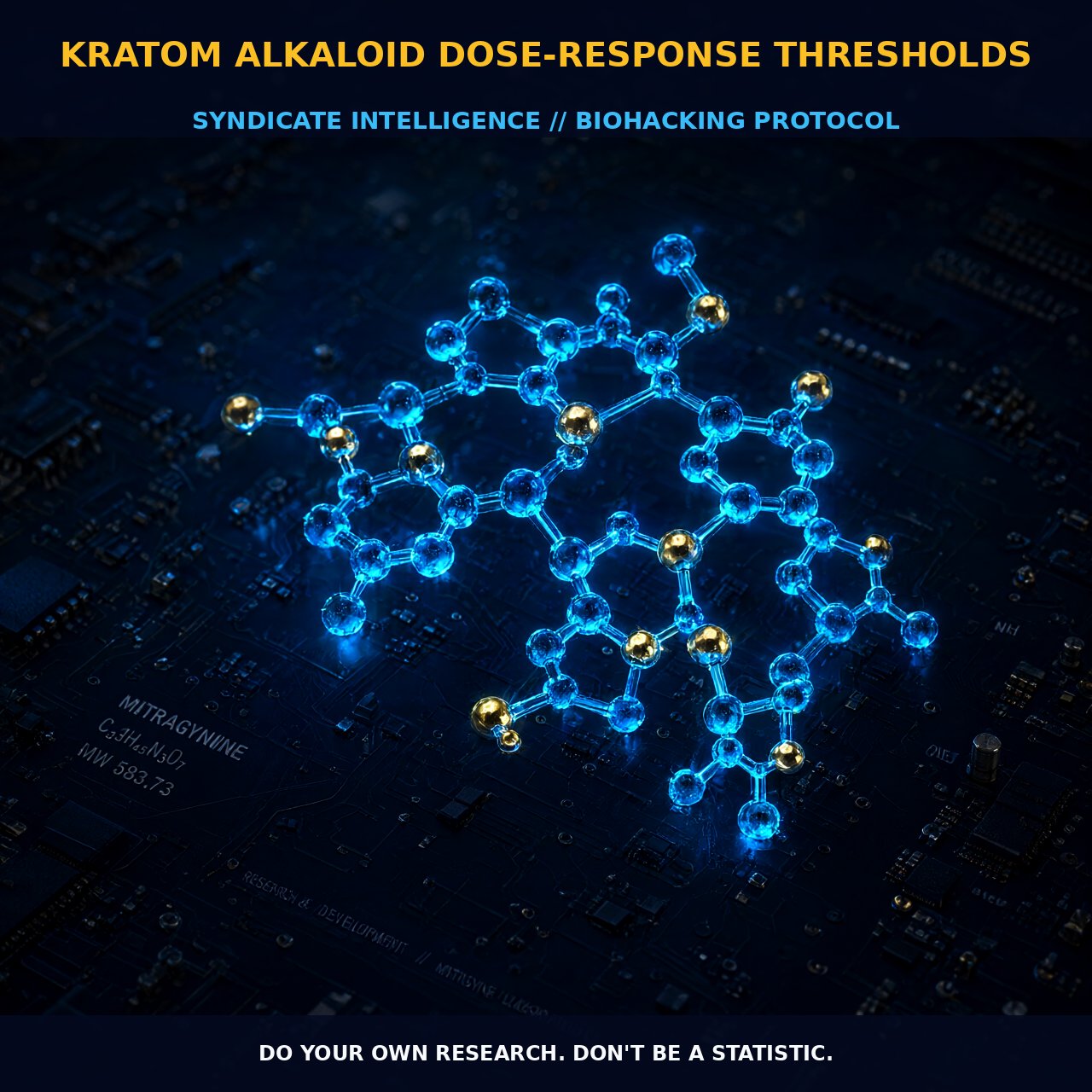
1. The Pharmacological Architecture
The therapeutic efficacy of Mitragyna speciosa is dictated by the intricate interplay between its primary alkaloids, mitragynine and 7-hydroxymitragynine. While human pharmacokinetic data is abundant, a critical gap remains in isolating precise alkaloid effect levels relative to adverse outcomes. Current commercial products often rely on standardized dry leaf powder metrics, which serve as imperfect proxies for true receptor occupancy due to significant variability in alkaloid content.
Six psychoactive alkaloids collectively shape the profile, including mitraphylline, speciociliatine, speciogynine, and paynantheine. These compounds modulate therapeutic effects through dose-dependent stimulant properties characteristic of the Rubiaceae family. Consequently, a shift from generic weight measurements to specific alkaloid thresholds is essential for biohackers seeking to optimize the balance between efficacy and safety.
2. Mechanistic Duality & Safety Profile
Kratom alkaloids exert a dual influence on both opioidergic and non-opioidergic pathways. Acting as partial agonists at mu-opioid receptors, they simultaneously engage adrenergic and serotoninergic systems to produce characteristic stimulant and analgesic effects. This mechanism mirrors the dose-response curve of caffeine: lower doses promote alertness via receptor modulation, while higher doses transition into muscle relaxation and pain relief.
Unlike traditional full agonists that depress central nervous system activity significantly, kratom maintains a favorable safety profile with minimal risk of respiratory depression or incapacitation. The World Health Organization has noted insufficient evidence for stricter control measures, as most reported fatalities involve high concentrations of polysubstance confounding variables. For biohackers, this confirms that typical non-polysubstance use is safe, provided users monitor their specific alkaloid thresholds.
3. Tactical Implementation & Circadian Alignment
Optimization begins with focusing on the ratio of mitragynine to 7-hydroxymitragynine rather than total dry weight. Begin with lower-to-moderate amounts to establish a personal baseline, leveraging the dose-dependent stimulant properties that prevent the tolerance accumulation typical of full opioid agonists. This approach supports utility for daily optimization rather than just crisis management.
Timing is paramount; align your intake with natural circadian dips in energy or the onset of mild withdrawal symptoms. This strategy maximizes partial mu-opioid receptor activation for sustained focus and pain modulation without the associated "crash." Treat commercial products as variable starting points, using self-reported qualitative data to refine your protocol until specific alkaloid concentrations become manageable through consistent selection.
4. Prostar Life Hack
Titrate by Ratio, Not Weight. Ignore the generic milligram count on the label and focus on the mitragynine-to-7-hydroxymitragynine ratio. Start low to map your personal receptor threshold, avoiding the sedation zone while preventing tolerance buildup. Monitor for polysubstance interactions if combining with other psychoactive agents, as high blood concentrations of prescription drugs can skew efficacy during peak absorption.
Prostar Life Hack
Titrate by Ratio, Not Weight. Ignore the generic milligram count on the label and focus on the mitragynine-to-7-hydroxymitragynine ratio. Start low to map your personal receptor threshold, avoiding the sedation zone while preventing tolerance buildup. Monitor for polysubstance interactions if combining with other psychoactive agents, as high blood concentrations of prescription drugs can skew efficacy during peak absorption.
[ AUTHOR: LEAD TECHNICAL RESEARCHER ]
[FRESH ON CHAIN: bd6627a01a5b6cb6... ]